We scored 52 glute machines across five categories and picked the seven worth your money.
The hip thrust is the lift people most often skip in a home gym, and it is almost never because it is hard. I went about three years doing mine off a bench edge with a rolled towel, and I skipped it constantly.
Everything here went through the same weighted scoring, and the owner reports did as much of the ranking as we did.
The aim was simple: find the machines that load your glutes properly and take the faff out of doing it.
Let’s see how they stacked up.
Related
We have been building and testing lower-body kit in this gym for years. If you are not ready to buy a machine, start with our guide to the best hip thrust alternatives here, and for the other half of the posterior chain look at our top picks for the best belt squat machine.
Compare the best glute machines
 GMWD
Check price
GMWD
Check price
|
 Nautilus Glute Drive
Check price
Nautilus Glute Drive
Check price
|
 Rogue Monster Lite
Check price
Rogue Monster Lite
Check price
|
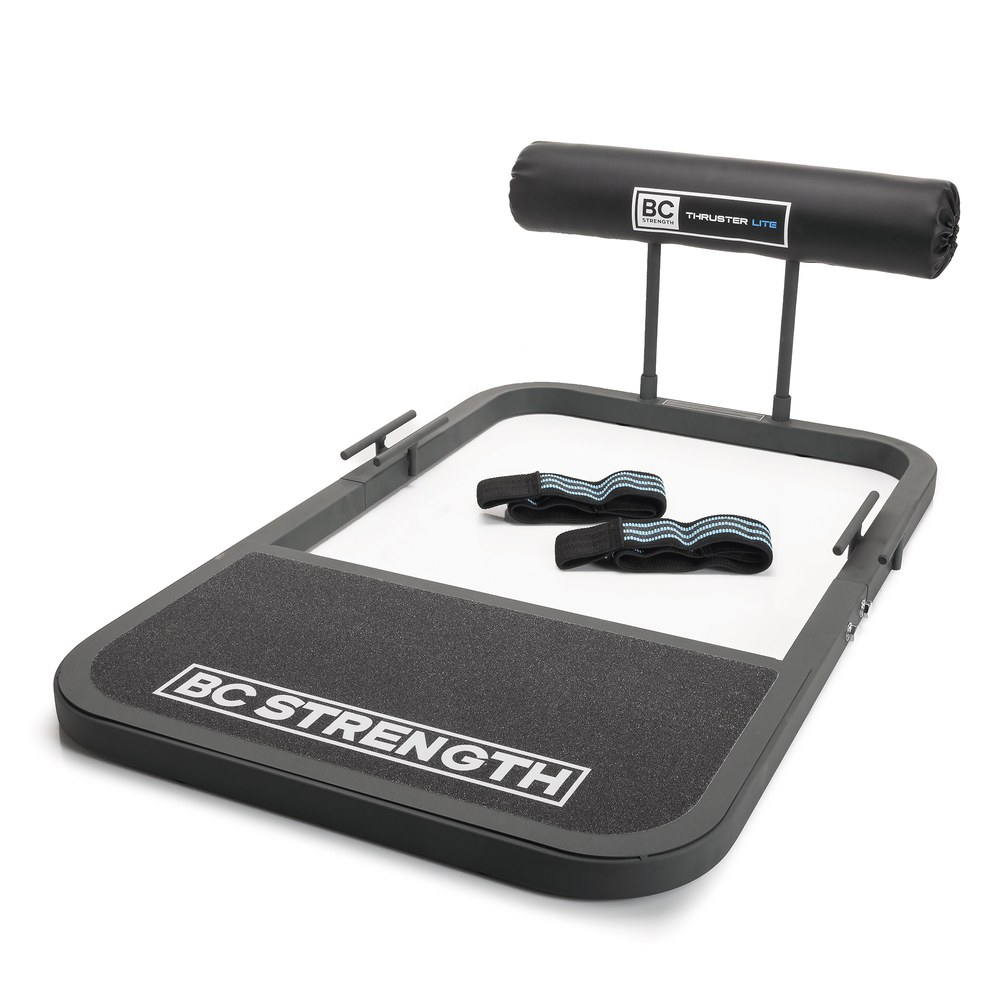 Thruster Lite
Check price
Thruster Lite
Check price
|
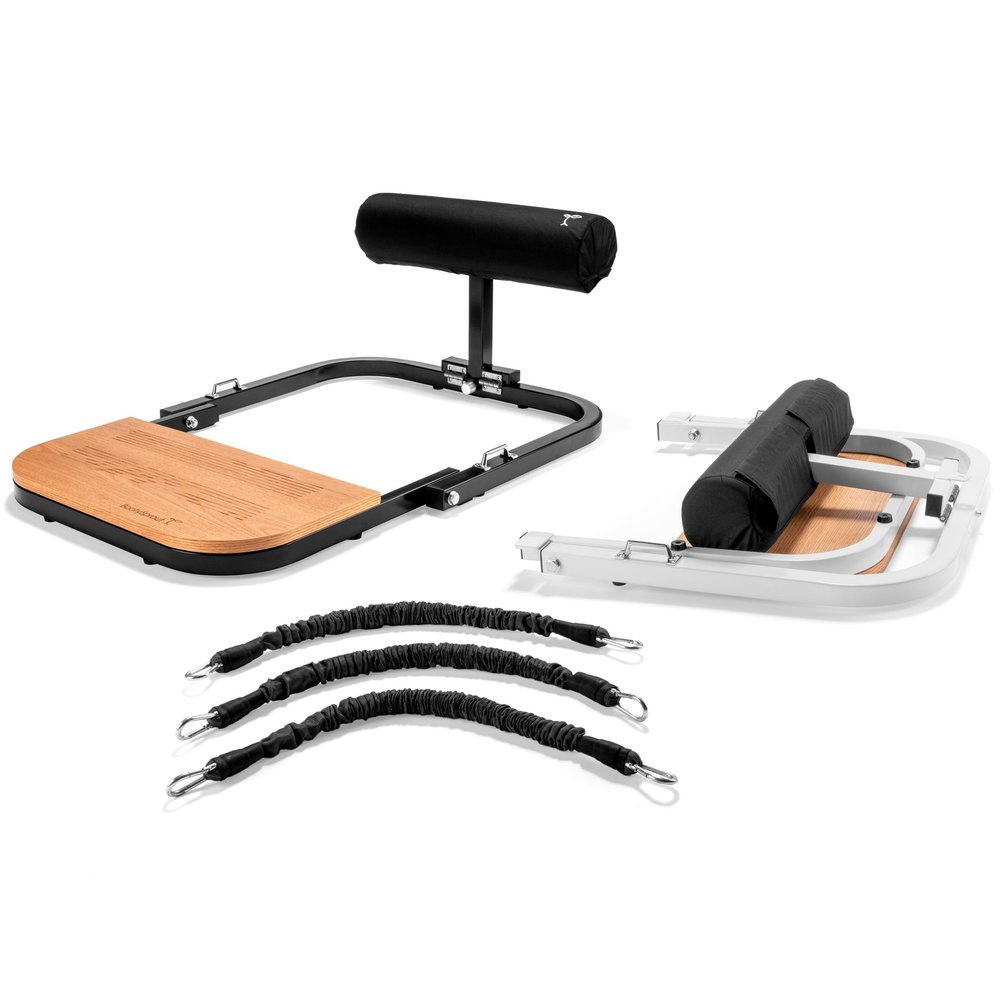 BootySprout
Check price
BootySprout
Check price
|
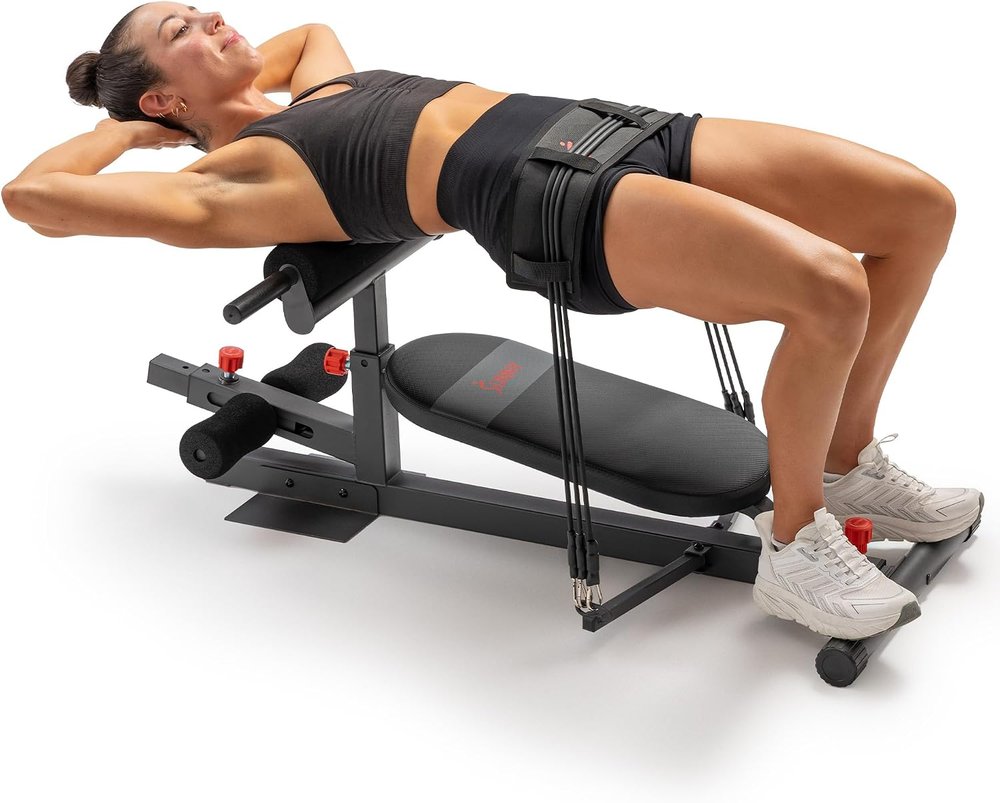 Sunny Health
Check price
Sunny Health
Check price
| ||
|---|---|---|---|---|---|---|---|
| Best for | Overall | Self-contained | Commercial grade | Rack owners | Barbell-free | Compact | Budget |
| Rating (*) | |||||||
| Build & stability | 96% | 84% | 94% | 92% | 82% | 80% | 72% |
| Loading & progression | 92% | 84% | 78% | 90% | 70% | 72% | 70% |
| Fit & comfort | 90% | 82% | 88% | 60% | 84% | 82% | 76% |
| Reputation & reviews | 93% | 80% | 66% | 58% | 80% | 82% | 88% |
| Value for money | 78% | 88% | 68% | 88% | 88% | 84% | 92% |
| Type | Barbell station | Plate-loaded | Plate-loaded | Rack attachment | Band-loaded frame | Band-loaded | Multifunction |
| Loads with | Your barbell | Plates | Plates | Your barbell | Bands | Bands | Plates or bands |
| Footprint | 55" x 33" | 71" x 31" | 62" x 60" | Mounts to rack | 28" x 42" | 29" x 25" stored | 70" x 26.5" |
| Capacity | Tested to 2,200 lb | 800 lb claimed | 360 lb | Your bar's limit | Two bands included | 135 lb shipped, 400 lb rated | Not published |
| Unit weight | 96 lb | 190 lb | 252 lb | 32 lb | 33 lb | 33 lb | 27.6 lb |
| Price | $$$ | $$ | $$$ | $$ | $$ | $ | $ |
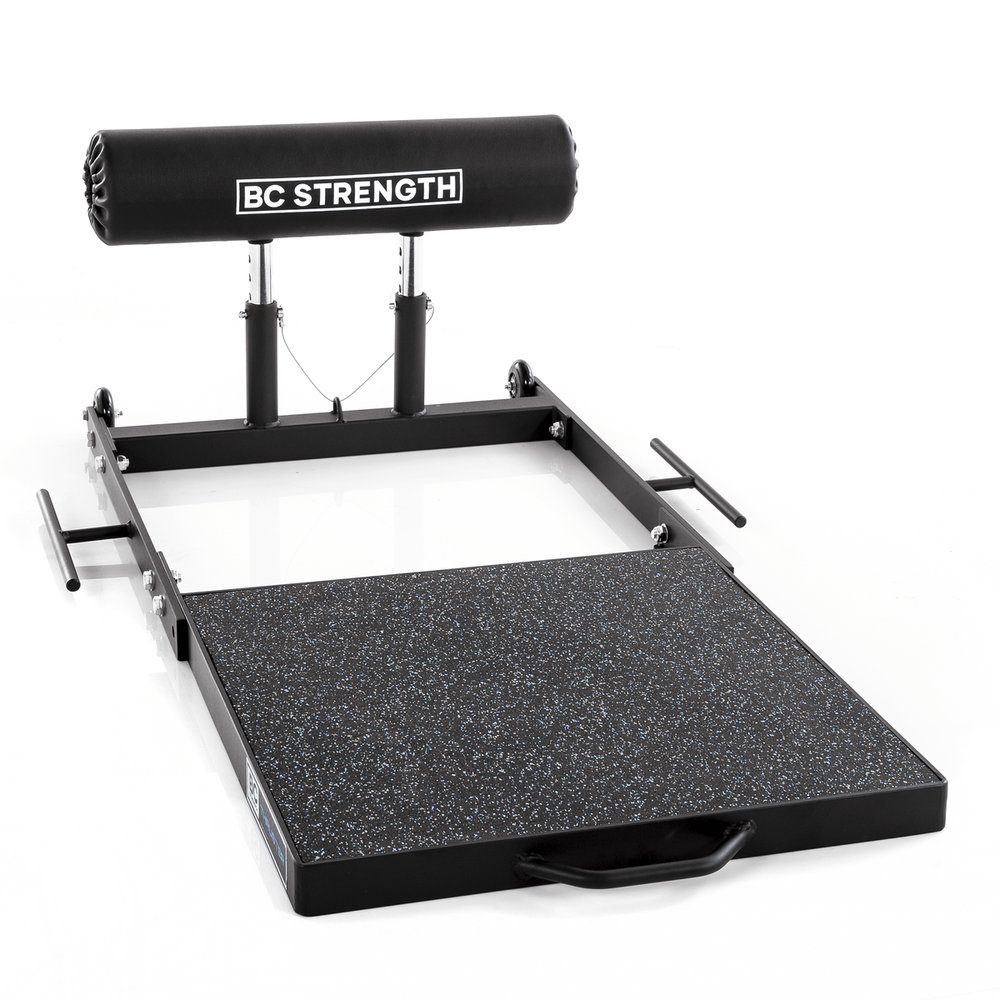 Thruster 3.0
Our testing and selection process
How we assess the glute machines
We always use a 5 step process in our reviews:
- We start as the buyer. Most of our team have hip thrusted off a bench with a rolled-up towel, and I did it for years before anything better arrived.
- We do a ton of research, collecting information on as many machines as possible and putting it into a spreadsheet.
- We rate each machine using our exclusive weighted rating system, explained in the section below.
- We use data to decide our top picks rather than personal bias toward brands.
- We get our hands on as many of the top picks as possible. Our community is great at helping with this.
You can read more about this process in our review guidelines.
How we test and score the glute machines
Below is an overview of how we reached the score and ranked the machines.
Specifically, it lists the factors in the rating formula and their gravity (how important they are).
I grouped them into five chunks for simplicity:
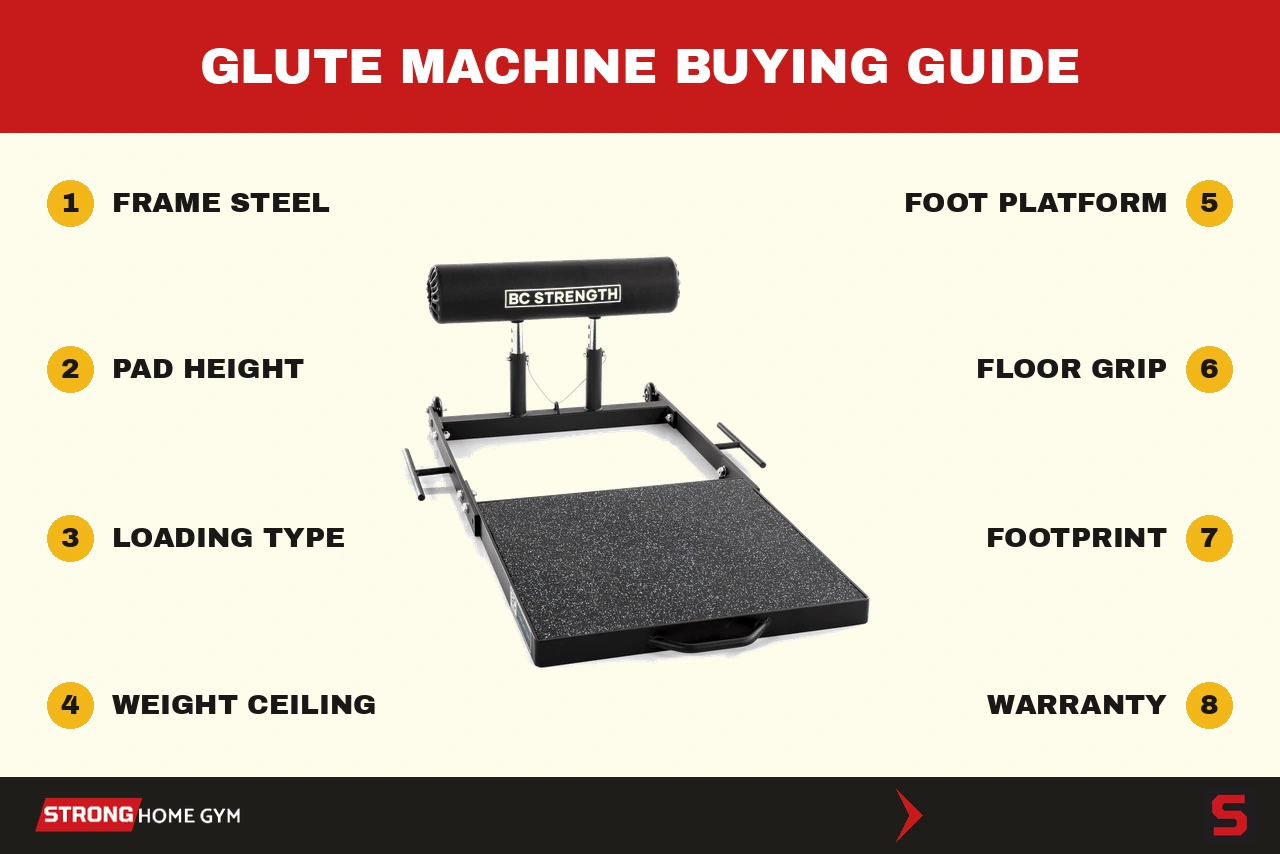
- Build and stability (34%) - the frame, the welds, and whether the thing stays where you put it when you drive into it.
- Loading and progression (24%) - how you add weight, how small the jumps are, and where the ceiling really sits.
- Fit and comfort (18%) - pad height and width, foot platform, and whether it suits your body rather than an average one.
- Reputation and reviews (10%) - what owners report over time, and what the brand does when a weld or a pad fails.
- Value for money (14%) - what you get for the outlay, adjusted for build and how long it will last.
Build and stability (34%)
A glute machine has a problem most gym kit does not. You push horizontally into it.
Almost everything else you own loads straight down. A hip thrust drives the load forward and up, which means the machine wants to slide away from you on every rep. On a bad one you spend the set fighting that, and by rep eight you are bracing against a moving object.
So the score leans on mass, base width and what sits between the frame and the floor. A heavy machine with rubber feet and a wide base stays put. A light one on bare steel skates.
I found this out on a painted garage floor, chasing a light frame a few inches further away with every rep until I gave up and put a mat under it.
My tip: whatever you buy, put it on rubber flooring rather than concrete or tile. It costs almost nothing and it solves most of the sliding problem on its own.
Loading and progression (24%)
This is the decision that shapes everything else, and it splits three ways.
How each loading type behaves:
- Bands. Cheapest, quietest, stores flat. The resistance climbs as you extend, which suits the hip thrust well, but there is a hard ceiling and the jumps between bands are large.
- Plates. Loads as heavy as you like in small increments, and you probably already own the plates. Slower to change, and you need somewhere to keep them.
- Your barbell. Effectively unlimited, smallest increments, nothing extra to store. Requires you to own a barbell and plates already.
One warning on plate-loaded machines. The advertised capacity and the reachable capacity are not always the same number, because the weight horns have to be long enough to physically hold that much iron. A machine claiming 800 lb on horns of about eight inches is quoting a frame rating rather than something you can load. We measured the horn before we believed the number.
My tip: if you already own a barbell and plates, look hard at the loading stations before the machines. You are otherwise buying a second way to hold weight you already have.
Fit and comfort (18%)
Pad height is the spec that decides whether the machine fits you, and almost nobody lists it prominently.
Too high and you cannot get your shoulders under the load without your hips starting halfway up, which cuts the bottom out of the range. Too low and you are squashed. The adjustable-height machines here cover a much wider range of people, and that is most of why they score well.
Steve, who coaches clients on this stuff all week, says pad height is the first thing he changes when someone new uses a machine, and that most people leave it where the last person left it.
Foot position is the other half of it, and it is free to fix. Aim for shins vertical at the top of the rep. Feet too far forward and the hamstrings take over; too far back and it becomes a quad exercise.
My tip: sit on the floor next to any machine you are considering and check where the pad lands on your shoulder blades before you load it. If it catches your neck, it is set wrong.
Reputation and reviews (10%)
Glute machines are a young category, and the review bases show it.
Several of the best-built machines here have a few dozen ratings rather than a few thousand, which is not a criticism of the machine but does mean you are buying with less information than you would on a bench.
So we weight two things. Depth of feedback, and the brand’s record on everything else it sells. A specialist with thirty happy owners and years of good service behind it is a different bet from an unknown with thirty happy owners, and a thin base caps how high a machine can score rather than sinking it.
Value for money (14%)
We build a price tower and reward the machines that do the same job for less.
In other words…
The honest question in this category is whether you are buying a machine or buying a bracket that holds weight you already own. Both are legitimate. Only one of them should cost premium-tier money.
Find the perfect glute machine for you
Best overall | Best self-contained | Best commercial grade | Best if you own a rack | Best barbell-free | Best compact | Best budget
Every pick here is a hip thrust machine, because that is the format that loads glutes hardest at home. If you are still weighing that against a kickback, a glute-ham unit or a reverse hyper, start with the types breakdown.
Here is how the seven machines stack up on our overall score:
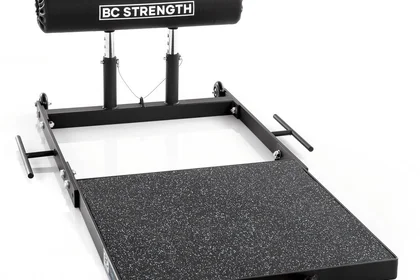
BC Strength Thruster 3.0
Best OverallQuick specs
- Load tested to 2,200 lb, rated for 1,300 lb
- 55” x 33” footprint
- Pad height adjusts 14.5” to 17.5”
- Rotating back pad on the upgraded model
- 96 lb unit weight
The only machine here with a published load test rather than a number on a listing, and the rotating pad fixes the worst part of hip thrusting.
Summary of experience, tests & opinions
What I like
- The rotating pad is the whole reason to buy it. The bar rolls into place and the pad follows your hips up instead of digging in at the top, which is the bit that makes people quietly drop the exercise.
- It sits low and wide enough that you can set up from the floor rather than lowering yourself onto a bench edge. Small thing, noticeable on a heavy set.
What I don’t
- You still have to load a barbell, so the setup saving is smaller than a plate-loaded machine’s. It is a better version of a barbell hip thrust, not an escape from one.
- The foot platform is grippy to the point of chewing through the soles of soft trainers over time.
Pros & cons
Pros
- Load tested to 2,200 lb, the only published test figure in the category.
- Pad height adjusts across three inches, covering most body sizes.
- Uses the barbell and plates you already own, so no ceiling to speak of.
Cons
- Premium tier, and the rotating pad is an upgrade rather than standard.
- You need a barbell and plates already, so it is no use as a first purchase.
Read more about the BC Strength Thruster 3.0
Buy this one if you already own a barbell and you want the hip thrust to stop being a chore.
What makes it the pick is not the steel, it is the number. BC Strength publish a load test figure of 2,200 lb and a recommended working limit of 1,300 lb.
Nobody will ever put 2,200 lb on it. The point is that somebody loaded the thing until it stopped and published what happened, where everyone else here either publishes nothing or prints a figure on the listing with no method behind it.
The rotating pad is the second reason. A fixed pad stays square while your hips travel through an arc, so it presses hardest exactly when the lift is hardest. Letting it rotate keeps the contact even through the top of the rep.
That is the whole pitch.
- You own a barbell and plates already
- You hip thrust heavy and want the range back
- Floor space is tight but you have some depth
- You want to load plates directly without a bar
- You want the cheapest way into the movement
- You would rather sit into a machine than set up on the floor
Where it loses points is value, and that is fair. It is the second most expensive pick here and it does not include the weight, the bar, or on the base model the rotating pad that makes it special. You are paying premium-tier money for a frame.
Side by side with the Rogue attachment, the question is whether you want a standalone station or something bolted to a rack you already own. The Rogue is cheaper and stores against a wall. This one works in any gym with a barbell in it.
Nothing else here has a load test published to back the number up:
Bottom line
The BC Strength Thruster 3.0 is the top-rated glute machine for 3 main reasons:
-
It is the only one with a tested rating. 2,200 lb from a published load test, against a category that mostly publishes nothing.
-
The rotating pad solves the real problem. Even contact through the top of the rep, which is where a fixed pad digs in hardest.
-
It has no weight ceiling. It takes your barbell, so progression is limited by your plates rather than by the machine.
It might be for you if… you already own a bar and plates and hip thrusting properly matters to you.
It’s not for you if… you want to skip the barbell entirely, where the GMWD loads plates straight onto the machine.
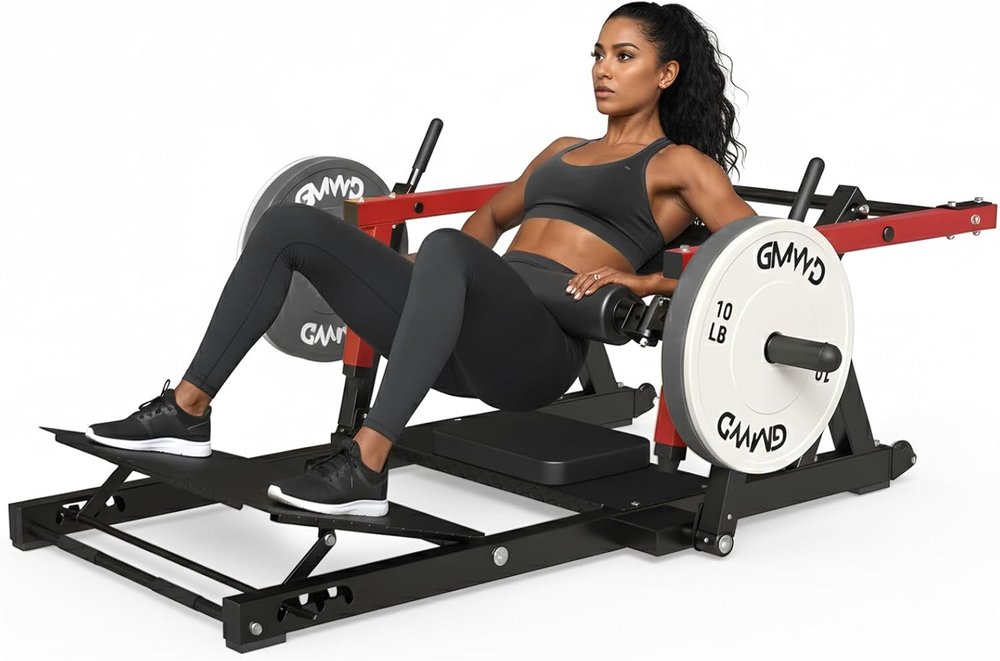
GMWD Hip Thrust Machine
Best Self-ContainedQuick specs
- Plate-loaded, no barbell needed
- 71” x 31” footprint, 22” tall
- 800 lb advertised capacity
- 190 lb unit weight
- 2 year manufacturer warranty
Loads plates straight onto the machine, so there is no bar to roll and nothing to set up.
Summary of experience, tests & opinions
Where it shines
- Loading it is the nicest part. Plates slide on at waist height while you are standing up, which after years of rolling a bar over your hips feels like cheating.
- At 190 lb it is heavy enough to ignore the sliding problem completely, even on a hard floor.
Where it falls short
- Nearly six feet of depth is a lot of garage for one exercise, and it is not a machine you tuck away.
- Assembly runs long. Budget an afternoon and a second pair of hands for the frame sections.
Pros & cons
Pros
- Plate-loaded, so no barbell or bench setup at all.
- 190 lb frame that does not move under load.
- Two-year manufacturer warranty.
Cons
- The 800 lb advertised capacity is not reachable on the weight horns it ships with.
- 71 inches deep, the second-largest footprint here.
Read more about the GMWD Hip Thrust Machine
This is the machine for someone who wants to stop touching a barbell.
That is a real buying motivation and it does not get enough respect. Plenty of people own a bar and still dread the hip thrust setup, and a plate-loaded machine removes it completely. You walk up, slide plates on, sit down, lift. Nothing gets rolled over anything.
Now the caveat, and it is the one genuinely interesting spec question in this article. The listing advertises 800 lb. The weight horns are roughly eight inches long. Eight inches of horn does not physically hold 800 lb of plates. The frame may well be rated to that figure, but you will run out of horn long before you run out of frame.
For almost everyone this is academic. If you are hip thrusting more than the horns hold, you have outgrown the whole category and want a commercial machine. We flag it because the number is on the listing and it is not a number you can use, and a similar claim sits on two other machines we looked at.
Side by side with the Nautilus, this is the value version of the same idea. The Nautilus is heavier, better finished and honest about a 360 lb ceiling. This one is cheaper and claims more than it can take.
On loading it sits behind only the two barbell picks, which is the point of a plate-loaded machine:
Bottom line
The best machine here if you want plates on a frame and no barbell in the equation. Ignore the headline capacity, measure your floor, and it is a lot of machine for a mid-tier price.
It might be for you if… the barbell setup is the reason you skip hip thrusts, and you have six feet of floor to give it.
It’s not for you if… space is tight, where the Thruster 3.0 takes sixteen inches less depth, as long as you are happy to keep loading a barbell.
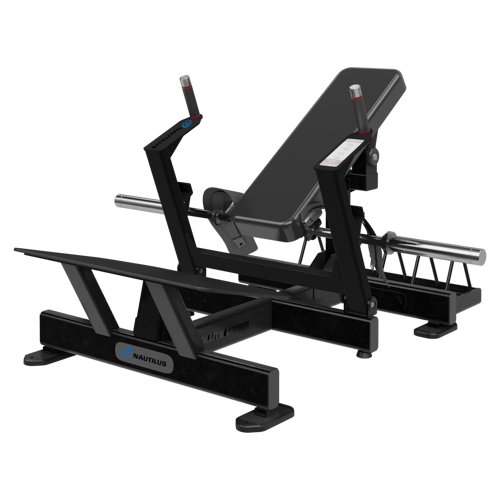
Nautilus Glute Drive
Commercial GradeQuick specs
- Plate-loaded, 360 lb capacity
- 62” x 60” footprint, 35” tall
- 252 lb unit weight
- Commercial-floor build
A commercial gym machine that happens to be buyable, and the only one here honest about its ceiling.
Summary of experience, tests & opinions
The wins
- It feels like a machine from a commercial floor because it is one. The pivot is smooth and silent in a way the home-market machines are not, and that shows up most on the last few reps.
- A quarter of a tonne of steel means the sliding problem simply does not exist. You can drive into it as hard as you like.
The downsides
- Getting it into a garage is the hard part. At 252 lb plus packaging it is a two-person delivery and a three-person carry.
- It takes ten square feet more floor than any other pick here and does exactly one exercise with it.
Pros & cons
Pros
- Commercial-grade frame and pivot, the nearest thing here to a gym-floor machine.
- Honest 360 lb capacity rather than an unreachable headline figure.
- Adjustable to a wide range of body sizes.
Cons
- Six owner ratings to go on, which is no base at all for the money.
- Largest footprint and the highest price tier in the roundup.
Read more about the Nautilus Glute Drive
This is the machine you buy when the budget is not the constraint and the floor space is not either.
Nothing else here feels like it came off a gym floor, because nothing else did. Nautilus make commercial equipment, the pivot runs without the faint grinding that cheaper machines develop, and 252 lb of frame makes the whole stability question disappear. If you have used a glute drive in a commercial gym and wanted that at home, this is that.
Two things stop it ranking higher, and neither is about the machine.
The first is feedback. Nautilus sell most of these into gyms rather than to individuals, so the consumer trail runs six ratings deep. All six are five stars, which tells you next to nothing. We weight how deep the feedback goes as well as how good it is, and six opinions is not a base to lean on for a machine at this end of the market.
The second is what it asks of your room. Sixty-two inches by sixty is over twenty-five square feet before you add walking space, for a machine that does one movement.
| Machine | Footprint | Unit weight | Ceiling |
|---|---|---|---|
| Nautilus | 62 x 60 in | 252 lb | 360 lb |
| GMWD | 71 x 31 in | 190 lb | Horn-limited |
| Thruster 3.0 | 55 x 33 in | 96 lb | Your barbell |
Only the top pick edges it on build, and that is on a published test rather than on feel:
Bottom line
Buy it if you want commercial quality at home and you have the room and the budget for it. Skip it if either of those is tight, because the machines below it do the same movement for less money in less space.
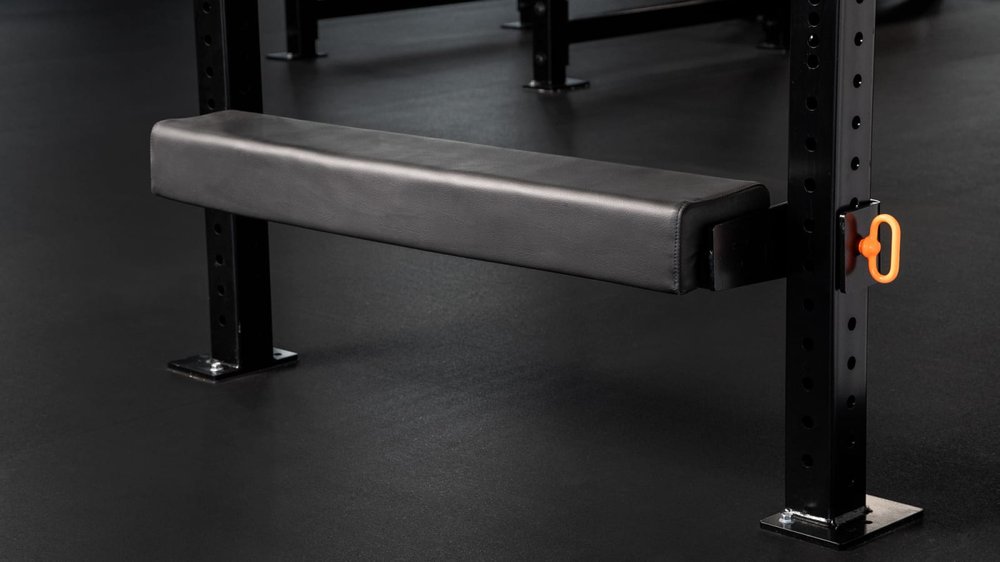
Rogue Monster Lite Hip Thruster Bench
Best for Rack OwnersQuick specs
- Bolts to a Monster Lite rack
- 32 lb, stores flat against a wall
- Uses your own barbell
- Rated 3.0 stars by over 50 owners
The cheapest serious route into loaded hip thrusts, as long as you own the right rack for it.
Summary of experience, tests & opinions
What worked
- Bolting it to the rack removes the sliding problem entirely. The rack is not going anywhere, so neither are you, and that is a different feeling from a free-standing machine.
- It comes off the rack in under a minute and hangs on a wall hook, which is not something any other pick here can claim.
What didn’t
- The pad height is whatever your rack’s hole spacing gives you, so fine adjustment is not on offer.
- Setting up still means rolling a bar over your hips. This fixes the bench, not the barbell.
Pros & cons
Pros
- Sturdy once it is on, which the owners who got it seated agree on.
- 32 lb, so it stores flat on a wall when not in use.
- Rogue build quality at a mid-tier price.
Cons
- Fitment is tight, so a rack that is out of square scratches or will not take it.
- Only fits Monster Lite uprights, so most people cannot use it at all.
- No pad height adjustment beyond the rack’s hole spacing.
Read more about the Rogue Monster Lite Hip Thruster Bench
If you own a Monster Lite rack, read this one first.
The economics are hard to argue with. You already own the heavy, stable, bolted-down part of a glute machine, which is the expensive bit. What you are missing is a correctly shaped pad at the right height, and that is all this is. It scores 92 on build because the build is mostly your rack.
Two things hold it back, and the first is worth reading twice. Owners are split on whether it fits at all, and the average has settled at three stars because of it. The frame is cut tight to the rack’s internal width, so a rig that is a quarter of an inch out of square at the floor either scratches the powder coat going on or will not seat. Several of the happiest owners open by admitting the bad reviews nearly put them off. Bolt your rack down square and none of this touches you.
The second is the number that never appears on the product page: how many people own a Monster Lite rack. If you do not, nothing above applies and the score is meaningless to you.
| Rogue attachment | Thruster 3.0 | |
|---|---|---|
| Needs a specific rack | Yes, Monster Lite | No |
| Stores away | On a wall hook | Stays on the floor |
| Pad adjustment | Rack hole spacing | 14.5 to 17.5 in |
| Price tier | $$ | $$$ |
On value only the budget pick beats it, because you are buying a pad and a bracket rather than a machine:
Bottom line
Buy it if you own a Monster Lite rack, in which case it is the most sensible purchase in this article. Skip it if you do not, because no amount of Rogue steel helps a bracket that will not bolt to anything you own.
BC Strength Thruster Lite
Best Barbell-FreeQuick specs
- Band-loaded, no barbell or plates
- 28” x 42” footprint, 33 lb
- Two bands included, four anchor points
- Sized for lifters 5’0” to 6’3”
- Rated 4.7 stars by over 50 owners
A full-size thrust station that turns up with its own resistance, so nothing else in the room has to exist first.
Summary of experience, tests & opinions
What works
- The resistance comes in the box. Two bands across four anchor points cover more range than people expect, and they stack, so a first session does not need a trip out for plates.
- The back pad lifts off and the frame is 33 lb, which makes storing it one-handed work rather than a job you put off.
What doesn’t
- Band tension runs backwards from a barbell. It is close to nothing at the bottom and hardest at lockout, which is the opposite of where most people want the load sitting.
- BC Strength publish no steel gauge, no pad dimensions and no warranty term, and a second storefront lists the frame at different dimensions again. For something you sit inside, that is thinner documentation than we would like.
Pros & cons
Pros
- Works with no barbell, no plates and no bench.
- Removable pad at 33 lb total, so storage is designed in rather than improvised.
- Rated 4.7 stars across more than 50 owners.
Cons
- Band tension peaks at lockout and fades at the bottom of the lift.
- No published steel gauge, pad size or warranty term.
Read more about the BC Strength Thruster Lite
The cheap way into the winner’s thinking.
Same brand as our top pick and the same patent behind the movement, but a very different machine. The Thruster 3.0 is a frame you load with a barbell you already own. This is a frame you load with bands, and that difference decides who it is for.
Plenty of people want to hip thrust and own no barbell, no plates and no bench. Every other pick above the budget end quietly assumes at least one of those. This one assumes nothing, which is why it earns a slot despite being one of the lightest frames here.
- You own no barbell, plates or bench
- You want the machine gone between sessions
- You are chasing tension, not a one-rep max
- You already own a barbell and plates
- You want small, even jumps in load
- You are already near the top of the band range
Where it gives ground is progression. Bands move in big steps and a band that feels right at lockout feels like nothing at the bottom, so the load you train is really the load at the top of the rep. That is fine for tension and volume. It is a poor way to chase a number.
Comfort is the other half of the story, and this is where it places well, because the pad is sized around a stated range of people rather than one:
Bottom line
The one to buy if your gym is a room with a mat in it and you would rather it stayed that way. It does the movement properly and then disappears against a wall.
It might be for you if… you want to train hip thrusts without owning a single plate.
It’s not for you if… you already have a bar and plates, where the GMWD puts real iron on the same movement.
BootySprout
Best CompactQuick specs
- Band-loaded, no plates needed
- Stores at 29” x 25” x 7”
- Three bands stack to 45, 90 and 135 lb
- 33 lb unit weight
Folds to seven inches deep and needs no plates at all. Extra bands take it far higher than the three it ships with.
Summary of experience, tests & opinions
What’s smart
- Seven inches deep when folded means it goes under a bed or behind a door, which is the only reason some people can own a glute machine at all.
- Band tension climbing through the rep suits the hip thrust better than dead weight does. It is hardest at lockout, which is where the glutes work hardest.
- Owners who have lived with one report a bit of flex through the midsection once the load gets serious. It holds, but you feel it.
What’s awkward
- The jumps are enormous compared with adding a plate. Roughly 45 lb at a time, so progression comes in steps rather than increments.
- The footplate is faux wood with no factory grip tape, and owners report it chipping at the edges over time. The Pro model’s metal plate is the fix, and it is sold out.
Pros & cons
Pros
- Stores at seven inches deep, by far the most compact pick.
- Needs no plates, barbell or rack.
- Three stackable bands covering 45 to 135 lb, and it takes more.
Cons
- Progression comes in 45 lb steps, and going past the included 135 lb means buying more bands.
- Band jumps are large, so fine progression is not possible.
Read more about the BootySprout
This is the pick for people whose gym has to disappear between sessions.
Most of this article assumes a garage or a spare room. If your training space is a living room floor, almost nothing above works, and the honest answer is a band-loaded unit that folds flat. Seven inches deep is the number that matters here, not the resistance.
The resistance curve is a genuine advantage too, not just a compromise. A band gets harder as it stretches, so the load peaks at lockout, which is exactly where a hip thrust is hardest and where dead weight is easiest. For moderate loads, band tension arguably suits the movement better than plates do.
The honest limit is the increment, not the ceiling. It ships with 135 lb of band and BootySprout rate it to around 400 lb once you add more, which is a real training load by anyone’s measure. What you cannot do is nudge it. Bands come in roughly 45 lb steps where a plate-loaded machine moves in fives, so at some point you are choosing between too easy and too hard.
Where it sits on comfort is better than its price suggests:
Bottom line
The right answer if your gym has to pack away, and the wrong one if you are chasing a heavy hip thrust. Know which of those you are before you buy.
It might be for you if… you train in a shared room and need the machine gone afterwards.
It’s not for you if… you already thrust above the band ceiling, where the GMWD takes plates instead.
Sunny Health and Fitness Hip Thrust Machine
Best BudgetQuick specs
- Multifunction hip thrust and squat trainer
- 70” x 26.5” footprint, 20.5” tall
- 27.6 lb unit weight
- Takes plates or bands
- Rated 4.4 stars by over 2,300 owners
More owners have rated this than every other machine here combined, and it costs less than a pair of plates.
Summary of experience, tests & opinions
Where it earns its place
- It is the cheapest honest way to find out whether you will actually use a glute machine. Plenty of people buy one, use it twice and resent it, and this costs little enough to absorb that.
- Light enough to move with one hand, so it lives against a wall and comes out when you want it.
Where it limits you
- At under 28 lb it needs a grippy floor or a wall behind it. On tile it travels.
- The pad is fine rather than good, and on longer sets you notice the difference from the machines above it.
Pros & cons
Pros
- Over 2,300 owner ratings, the largest base in this article.
- Lightest pick here, so it stores easily.
- Takes plates or bands.
Cons
- Lightest frame, which shows up as sliding on hard floors.
- No published capacity figure.
Read more about the Sunny Health and Fitness Hip Thrust Machine
Buy this one to find out if you are the kind of person who uses a glute machine.
That sounds dismissive and it is not meant to be. This is a genuine category problem: hip thrust machines are a newish purchase, most people have never used one at home, and the serious options cost real money. Spending a small amount to learn whether the thing earns its floor space is a sensible way to approach it.
The review base backs that up. Over two thousand three hundred ratings is more than every other machine in this article combined, which tells you a lot of people have made exactly that decision.
Its weakness is its weight. Twenty-eight pounds of frame against a horizontal drive is not much, so it wants a rubber floor or a wall behind it. Fix that and it does the job.
On value nothing here touches it, which is the entire reason it is on the list:
Bottom line
The low-risk way in. Put it on rubber, keep the weight sensible, and it does the movement properly for a fraction of what the machines above it cost.
What counts as a glute machine, and is a hip thrust machine the best one
Every pick above is a hip thrust machine, and that is not an accident. It is the format that loads the glutes hardest through the range they actually work in, and it is what most people mean when they search for a glute machine.
It is not the only option though, and the others suit different problems.
| Machine | Loads the glutes | Buy it for |
|---|---|---|
| Hip thrust machine | Heaviest, through full extension | Building strength and size |
| Glute kickback | Light, very isolated | Accessory volume, one leg at a time |
| Glute-ham or Nordic | Shares the load with hamstrings | Hamstring strength and knee health |
| Reverse hyper | Moderate, with spinal decompression | Back recovery plus posterior chain |
| Cable machine | Light to moderate, any angle | Variety if you own one already |
The kickback machines are the ones people most often expect to see in a list like this. We looked hard and found one genuine home-buyable option, which was out of stock when we scored. They also load far less than a hip thrust by design, because one leg is moving a light arm rather than both hips moving a bar.
For the hamstring end of the chain, a glute-ham developer is the better tool, and we cover those separately in our guide to the best GHD machines.
Does a machine hip thrust work as well as a barbell one?
Near enough, and the research is more useful here than the marketing.
A 2023 conference abstract in Medicine & Science in Sports & Exercise (Petrizzo and colleagues) put 28 resistance-trained adults through both versions at a 10-rep max with surface EMG.
Glute activation came out statistically similar. The differences showed up elsewhere. The machine shifted more work to the hamstrings and less to the quads, and the barbell allowed more knee-flexion range at both ends of the rep.
Ease of use split 53.6% to 46.4% in the machine’s favour, which is close to a coin toss. The one lopsided result was the recommendation: 92.9% said they would point an untrained lifter at the machine.
So the barbell keeps a small technical edge, and the machine wins on the thing that actually decides results, which is whether you do the lift at all.
How we created this list of best glute machines
Here are our criteria on how we picked these glute machines, and how we valued each criterion when making decisions:
- Build and stability (34%)
- Loading and progression (24%)
- Fit and comfort (18%)
- Reputation and reviews (10%)
- Value for money (14%)
You can find out all about our selection process here.
Other glute machines we tested - close-but-no-cigar
This category is having a supply problem. Five of the machines we most wanted to rank were not buyable on the day we scored, and one of those has gone for good. That is worth stating plainly, because every one of them is still being recommended elsewhere.
- Bells of Steel Hip Thrust Machine V2 - sold out when we scored, and the machine our community rates highest. Worth waiting for if you like the brand.
- BootySprout Pro - sold out in both colours. The bigger, stiffer version of our compact pick, and the one owners who have used both now prefer.
- HVO HT801 - a promising budget plate-loaded machine with an 880 lb claim and good early reviews, currently unavailable on the only channel we could verify. One to watch rather than one to buy.
- Body-Solid Powerline Glute Max - the only true glute kickback machine we found that makes sense at home. Temporarily out of stock.
- Core Home Fitness Glute Drive Plus - discontinued, not merely out of stock. It has gone from Core Home Fitness’s own catalogue entirely, and their site search for “glute” now returns nothing. If you see it recommended, that guide has not been checked in a while.
- Titan Standing Hip Thrust Machine - the most interesting machine we looked at and the one we could not score. It is in stock, it is the only vertical thrust design here, and the spec sheet is generous: six thigh-pad heights, three angles, a pad that swings clear for entry. It also has no reviews anywhere, on Titan’s site or Amazon. We will not rank a machine on reputation it has not earned yet. Worth a look in six months.
- Rogue Floor Glute - excellent piece of kit, but it trains the Nordic curl pattern rather than the hip thrust, so it is answering a different question.
- Titan Glute and Hamstring H-PND Combo - a GHD and reverse hyper in one. Adjacent to this list rather than on it, and a good buy if that is what you actually want.
- Signature Fitness, Mikolo, Yes4All and Lifepro GluteBlast - all buyable, all fine, all beaten on build or review depth by something above.
Glute machine FAQs
Are hip thrust machines worth it?
For most people who hip thrust regularly, yes, and the reason is setup rather than muscle.
Rolling a loaded barbell over your hips, wedging a pad in place and bracing against a bench is the part people quietly stop doing. A machine removes all of it, so the lift happens more often.
Published EMG work puts machine and barbell glute activation broadly level, with the barbell holding an edge on range of motion.
What is the best machine for glutes at home?
A hip thrust machine, in most home gyms, because it loads the glutes hardest through the range they actually work in.
Kickback machines isolate more precisely but load far less, and glute-ham units train the hamstring end of the chain more than the glute end.
If you already own a barbell and plates, a loading station like the Thruster 3.0 usually beats a full machine.
Is a machine hip thrust as good as a barbell hip thrust?
Close, with a trade-off each way.
The 2023 EMG work found similar glute activation. The barbell allowed more knee-flexion range; the machine shifted a little more work to the hamstrings.
Nearly all the participants said they would point an untrained lifter at the machine. Consistency usually beats the marginal difference.
How much space does a glute machine need?
More than the listing suggests, because the footprint is not the same as the space you need around it.
A plate-loaded machine like the GMWD runs close to six feet deep, and you need room to walk down the loading side.
Barbell stations are the compact answer at roughly three feet by four and a half.
Can you build glutes without a machine?
Yes, and plenty of people do.
Barbell hip thrusts, Romanian deadlifts, split squats and back extensions all load the glutes heavily with kit most home gyms already own. Our guide to hip thrust alternatives covers the movements.
What a machine changes is how often you bother, not what is possible.
What weight should I start with on a hip thrust machine?
Lighter than your barbell hip thrust, at least for the first session.
The pad position and fixed bar path change where the load sits, so a familiar weight can feel very different. Start around half your usual and run a set of ten.
Getting the pad height right matters more than the number on the horns.
The bottom line
For most people who already own a barbell, the BC Strength Thruster 3.0 is the one to buy. It is the only machine here with a published load test behind its rating, the rotating pad fixes the part of the lift that makes people quit it, and your plates set the ceiling rather than the frame.
Just know that you are buying a frame, not a machine with weight included.
If you own a Monster Lite rack, stop reading and get the Rogue attachment instead. Want plates on a machine and no barbell at all? The GMWD. No barbell and no plates? The Thruster Lite. Training in a room that has to look normal afterwards? The BootySprout folds to seven inches.
There are two things to do now:
- If you want to give the machines another look, click here to skip back to the table.
- If you want to put a pin in it, bookmark this page and come back. We keep it updated, fresh, and relevant.
Stay strong.