We scored 64 sets of parallettes across five categories and picked the seven worth your money.
The thing nobody tells you is that height decides almost everything, and most buying guides sort by brand instead. I bought a mini pair first, spent a month wondering why my L-sits were scraping the floor, and then bought again.
Seven sets came out of a field of sixty-four, scored on the same five things in the same order.
The aim was simple: work out which height you actually need, then which bars are worth buying at that height.
Let’s see how they stacked up.
Related
We have been adding bodyweight work to this gym for years. For the standing version of the same job, see our guide to the best dip bars here, and if you want your hands moving rather than fixed, look at our top picks for the best gymnastics rings.
Compare the best parallettes
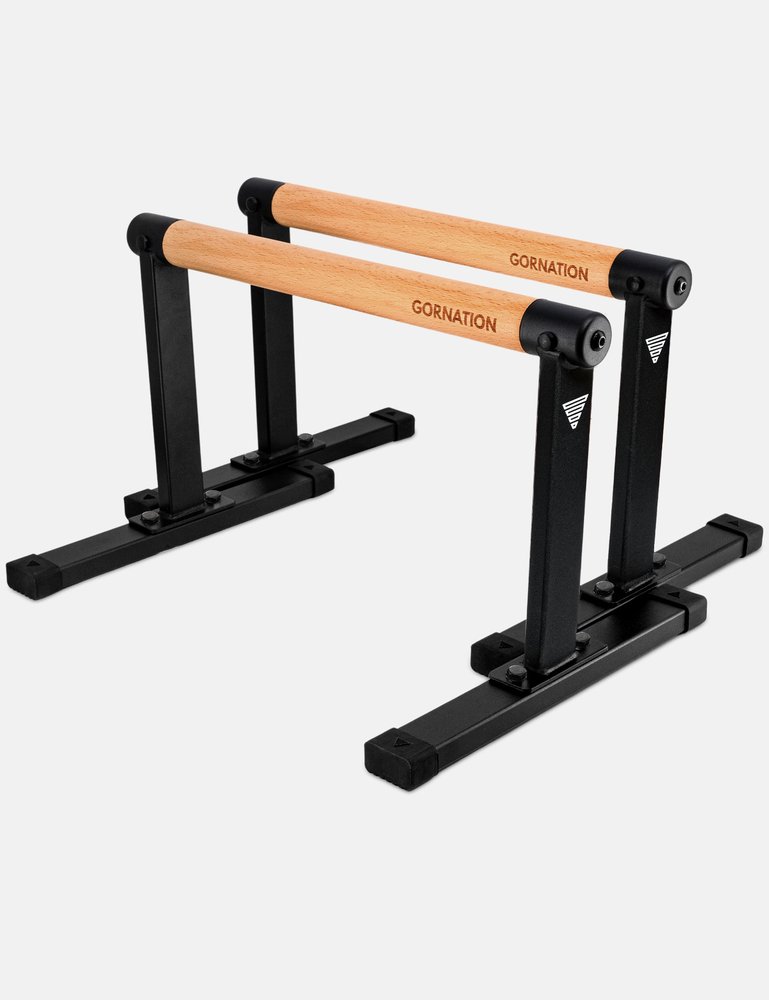 GORNATION Max
Check price
GORNATION Max
Check price
|
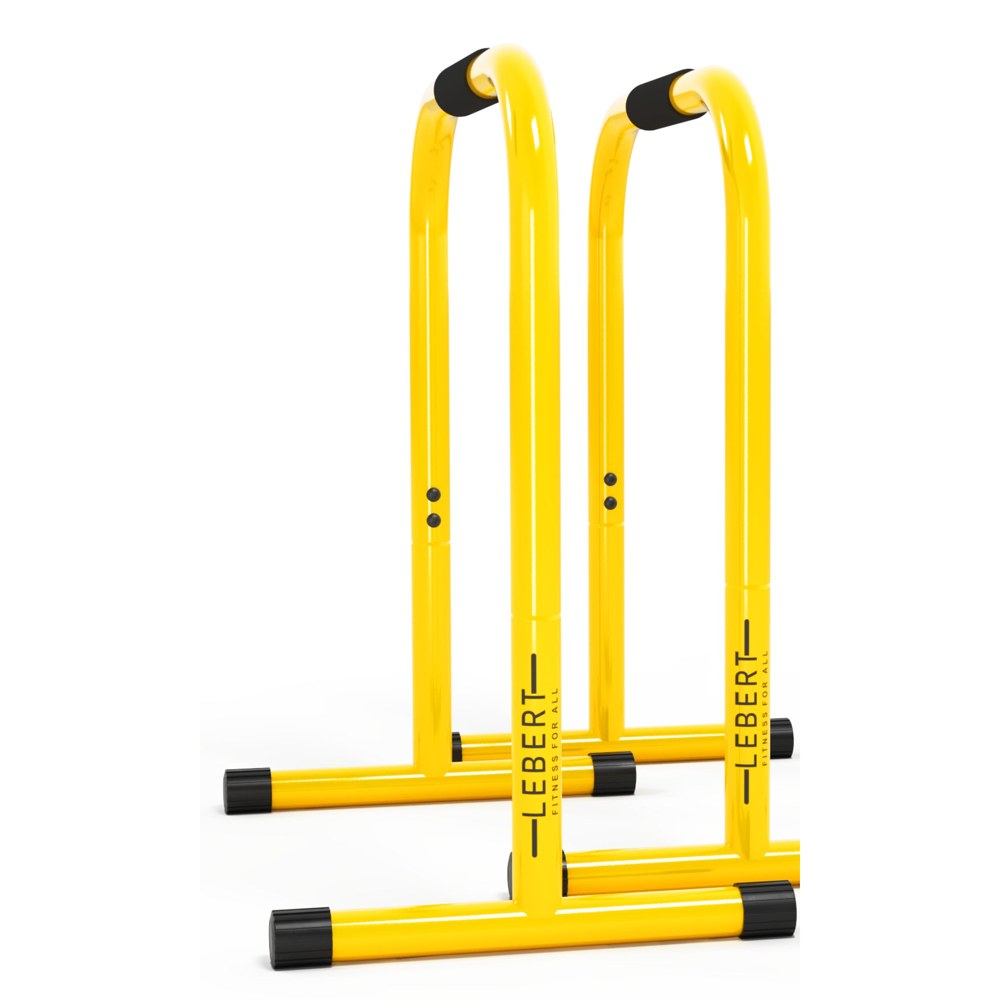 Lebert EQualizer
Check price
Lebert EQualizer
Check price
|
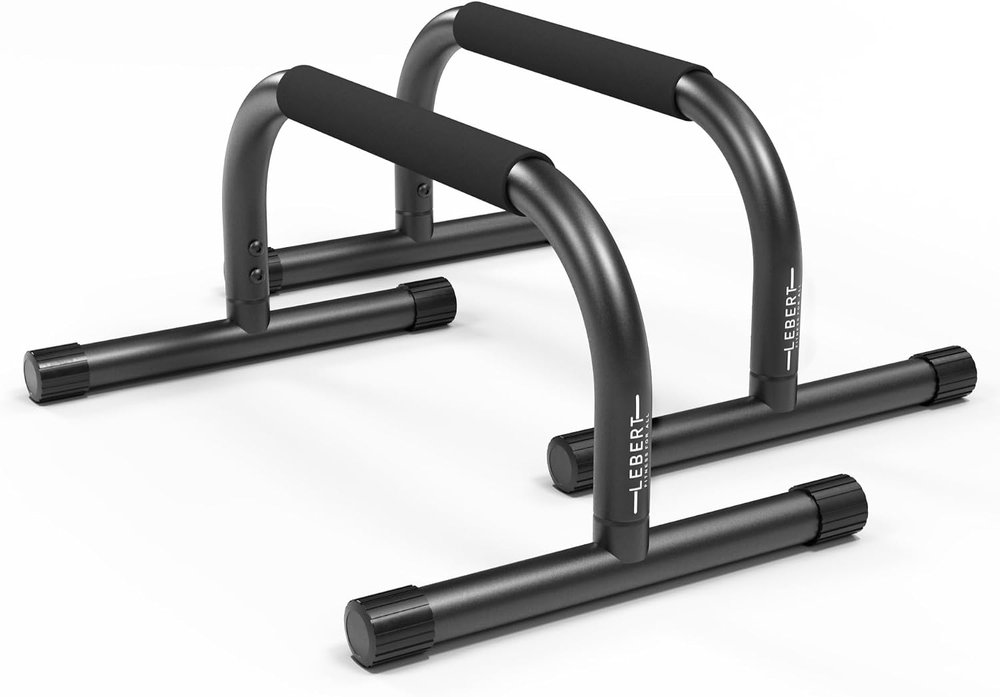 Lebert Parallettes
Check price
Lebert Parallettes
Check price
|
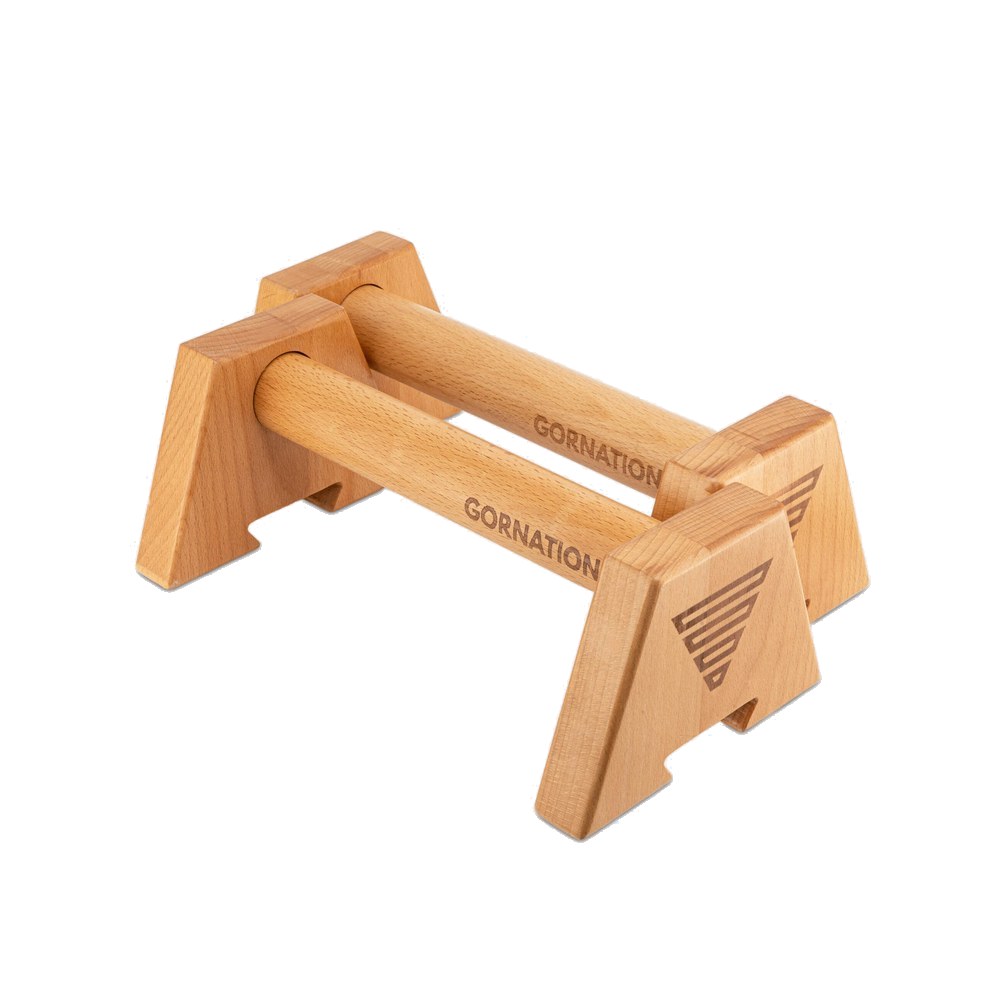 GORNATION Wooden
Check price
GORNATION Wooden
Check price
|
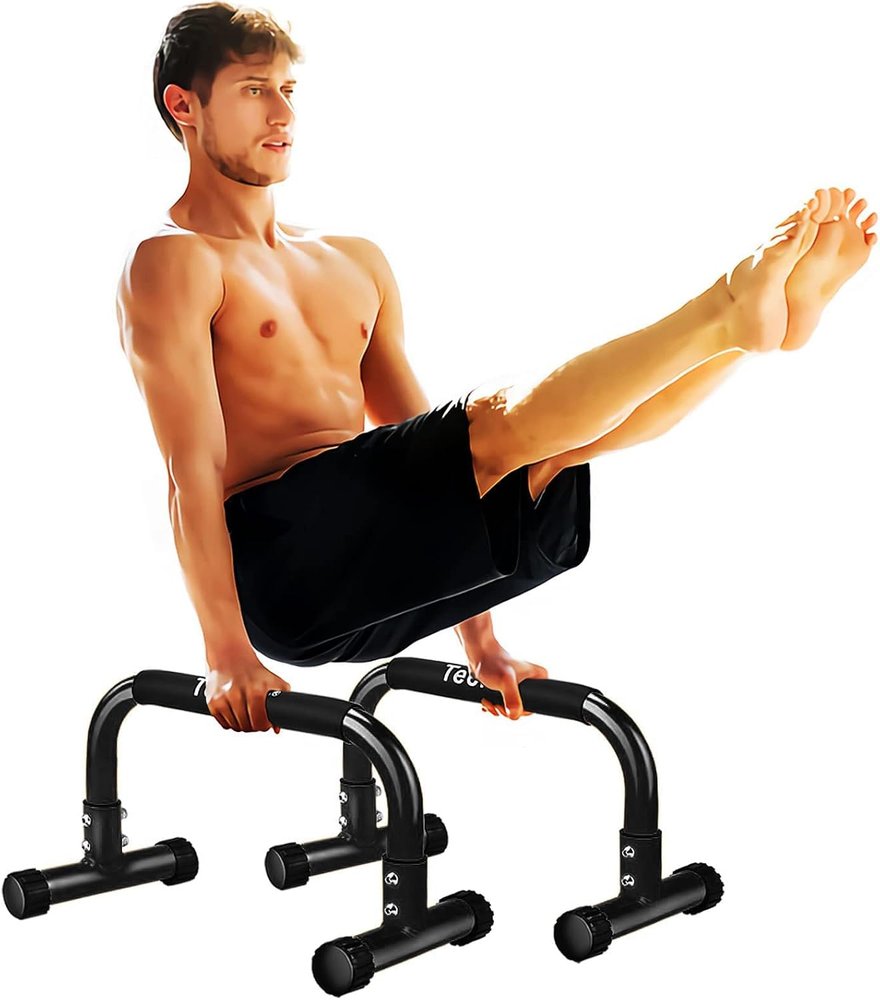 Teclor
Check price
Teclor
Check price
|
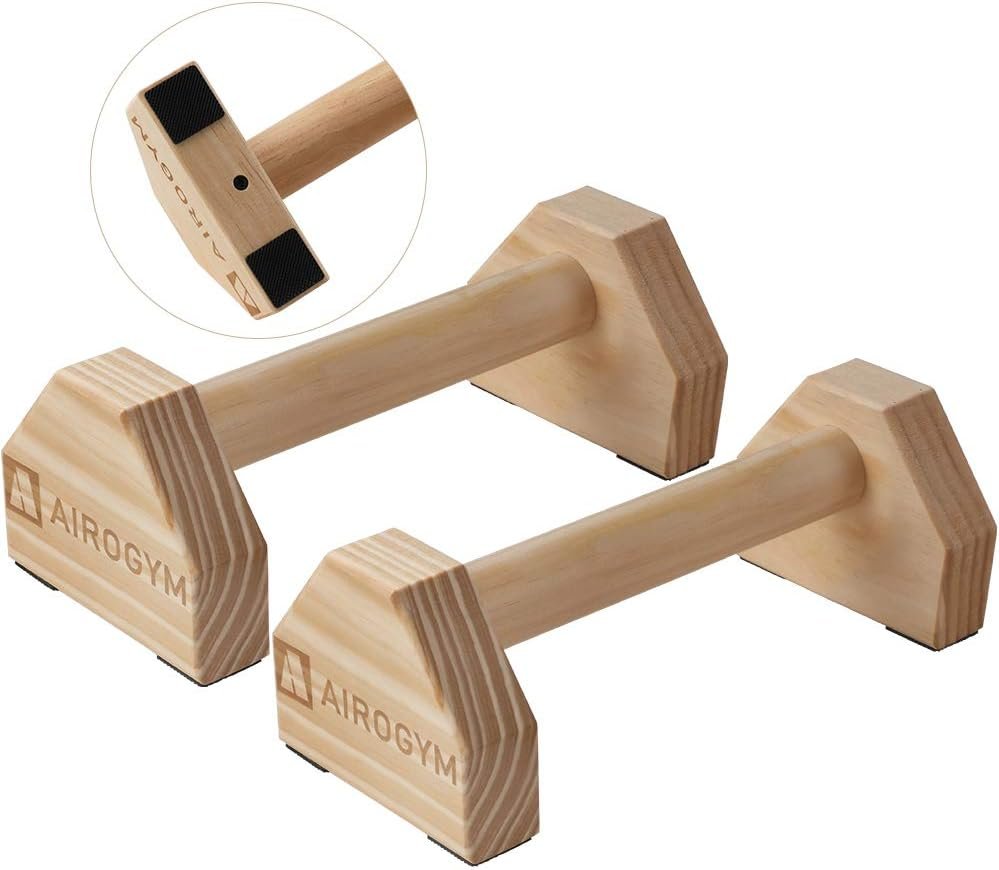 Airogym
Check price
Airogym
Check price
| ||
|---|---|---|---|---|---|---|---|
| Best for | Overall | Grip | Tall | Value | Wooden | Budget | Mini |
| Rating (*) | |||||||
| Stability | 96% | 87% | 84% | 80% | 74% | 72% | 70% |
| Grip & comfort | 84% | 96% | 78% | 80% | 94% | 78% | 90% |
| Height & skill range | 88% | 88% | 92% | 86% | 68% | 80% | 64% |
| Build & portability | 94% | 92% | 82% | 80% | 92% | 76% | 80% |
| Value for money | 70% | 66% | 94% | 90% | 80% | 92% | 90% |
| Height class | Medium | Medium | Tall | Medium | Mini | Low | Mini |
| Height | 14" | 11.8" | 28" | 12" | 4.5" | 9.5" | 3.9" |
| Bar diameter | 1.5" | 40 mm | 1.8" | Not published | 40 mm | 1.5" | 1.57" |
| Base width | 15" | 13.8" | 16" front-back | 16" | 6.3" | 8.3" | 5.3" |
| Material | Steel | Beech on steel | Steel | Steel | Red beech | Steel | Wood |
| Capacity | Not published | 1,100 lb pair | 400 lb | 400 lb | 661 lb pair | 660 lb | 440 lb |
| Price | $$$ | $$$ | $$ | $$ | $$ | $ | $ |
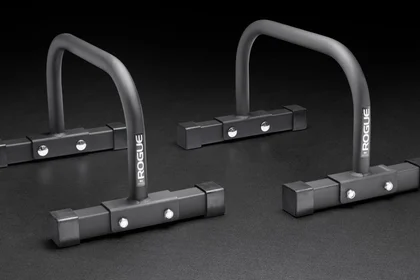
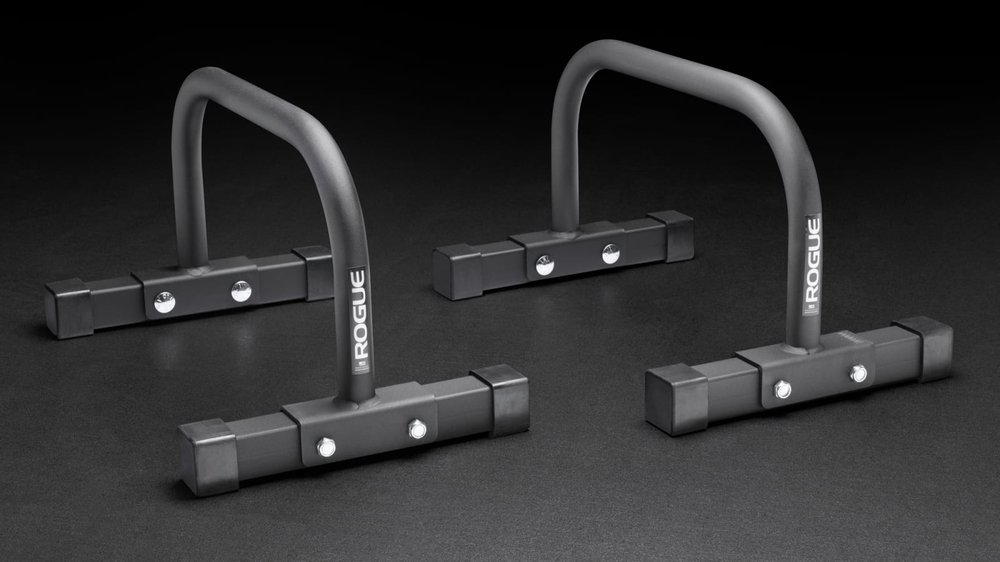 Rogue Bolt-Together
Our testing and selection process
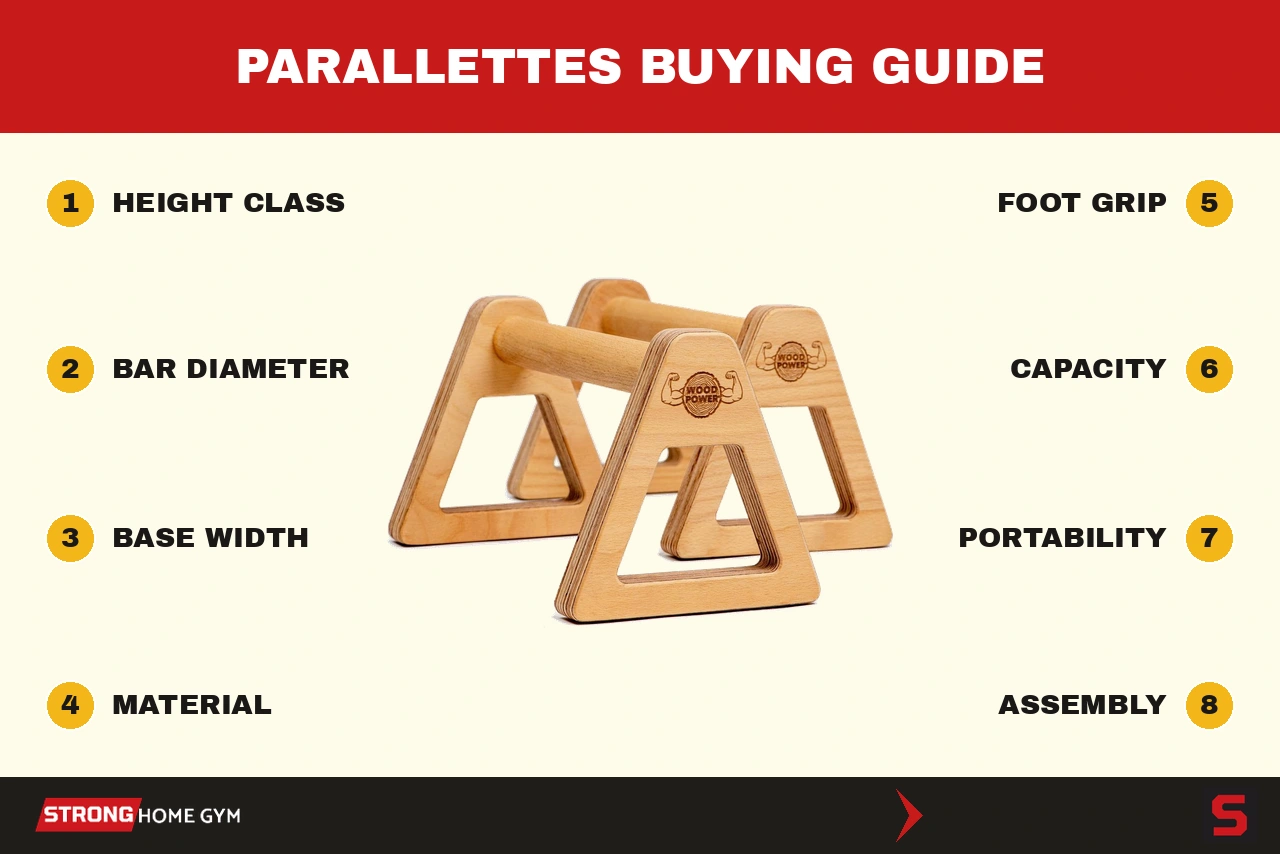
How we assess the parallettes
We always use a 5 step process in our reviews:
- We start as the buyer. Most of our team own a set, and I have bought the wrong height once already so I know how that feels.
- We do a ton of research, collecting information on as many sets as possible and putting it into a spreadsheet.
- We rate each set using our exclusive weighted rating system, explained in the section below.
- We use data to decide our top picks rather than personal bias toward brands.
- We get our hands on as many of the top picks as possible. Our community is great at helping with this.
You can read more about this process in our review guidelines.
How we test and score the parallettes
Below is an overview of how we reached the score and ranked the sets.
Specifically, it lists the factors in the rating formula and their gravity (how important they are).
I grouped them into five chunks for simplicity:
- Stability (32%) - base width, weight, and the feet. Whether the bar stays put when your weight moves over and past it.
- Grip and comfort (22%) - bar diameter, material and finish, and what your hands feel like after a long hold.
- Height and skill range (20%) - what the height lets you train, and what it quietly rules out. The score rewards total range unlocked, so a tall set that adds dips and rows scores well even though medium is the class we point most people at.
- Build and portability (14%) - materials, rated capacity, and whether you can realistically travel with them.
- Value for money (12%) - what you get for the outlay across a piece of kit that should last a decade.
Stability (32%)
A parallette fails in one specific way: it tips.
Not dramatically, usually. It rocks an inch as you shift into an L-sit, or one bar creeps outward during a planche lean, and you spend the hold managing it instead of training. On a handstand it matters more than that.
Two things decide it. Base width, which is the span of the feet rather than the grip width, and the feet themselves.
The feet deserve more attention than they get. Across the sets we looked at, foot quality varied enormously even within a single brand’s own range, and it tracked neither price nor material. A premium wooden set can ship with harder plastic feet than a budget steel one. It is the single most overlooked spec in the category.
My own pair skated about on sealed concrete until I put them on a mat, and I had assumed for weeks that I was the problem rather than the rubber.
My tip: test a new set on the hardest floor you own before you trust it upside down. Rubber and carpet hide a bad foot completely.
Grip and comfort (22%)
Bar diameter is where wood earns its reputation.
The hybrid and mini bars here run 40 mm and 1.57 inches, against 1.5 inches on most of the steel sets and 1.8 on the tall one. Thicker is generally kinder, because the load spreads across more of your palm instead of concentrating under the base of your fingers, and that is what decides whether a long L-sit ends because your core gave out or because your hands did.
Material matters as much as size. Wood warms up, absorbs a little sweat and stays grippy. Steel does the opposite: cold in the hand, and slick the moment you start sweating.
| Wood | Steel | Hybrid | |
|---|---|---|---|
| Grip when sweaty | Stays grippy | Gets slick | Stays grippy |
| Weight on the base | Light | Heavy, so it stays put | Heavy base |
| Left outdoors | Degrades | Fine | Bar suffers |
| Typical diameter | 38 to 40 mm | 1.5 in | 40 mm |
My tip: if you have small hands, do not assume thicker is automatically better. A 40 mm bar is lovely for a long hold and harder to hang onto in a false grip.
Height and skill range (20%)
This is the whole article in one criterion, and it is what the rest of the internet gets wrong.
Height is not a preference. It decides which skills are physically available to you, and buying the wrong class means bars that cannot do the thing you bought them for. The full breakdown is in the height section after the picks, but the short version is below.
My tip: if you genuinely cannot decide, buy medium. It is the only class that never rules anything out completely, and it is the height most people settle on after owning two sets.
Build and portability (14%)
The trade here is straightforward. Heavier bars are more stable and worse to travel with.
Steel sets land around 30 lb a pair and never move once you put them down, which is exactly what you want at home. Wooden sets come in near 10 lb and fit in a bag. Bolt-together designs sit in the middle and can be broken down, at the cost of bolts that want checking every few months.
Value for money (12%)
We build a price tower and reward the sets that do the job for less.
In other words…
Parallettes are two pieces of shaped material with no moving parts, so the ceiling on what they should cost is low. Premium pricing here buys a nicer bar and better feet, and that is a real thing to buy, but it is not the difference between training and not training.
Find the perfect parallette set for you
Best overall | Best grip | Best tall | Best value | Best wooden | Best budget | Best mini
Here is how the seven sets stack up on our overall score:
Rogue Bolt-Together Parallette Set
Best OverallQuick specs
- 14” tall, medium height class
- 1.5” steel bar, 24” long
- 15” base width
- 32 lb per pair
- Rated 4.8 stars by over 100 owners
Thirty-two pounds a pair on a fifteen-inch base. Nothing else here is as hard to move once you put it down.
Summary of experience, tests & opinions
What I like
- The weight is the feature. At 32 lb a pair you place them once and they stay exactly there through an entire session, including the parts where you are upside down and not thinking about the bars at all.
- Fourteen inches turns out to be the sweet spot for L-sits if you are average height. Legs clear the floor without you having to pike hard to make room.
What I don’t
- Bare steel goes cold and gets slick once your hands are damp. It is the one place a wooden bar is plainly better.
- Bolt-together means bolts, and they want a check every few months. Not a flaw, just a job nothing else here asks of you.
Pros & cons
Pros
- Fifteen inch base under 32 lb of steel, the heaviest medium set here.
- Breaks down flat for storage or transport.
- Rated 4.8 stars across more than 100 owners.
Cons
- Premium tier, and the bare steel bar is the least comfortable of the top three.
- 32 lb a pair makes them the worst travel option here.
Read more about the Rogue Bolt-Together Parallette Set
Buy these if the bars are staying in one room and you want to stop thinking about them.
The case is stability, and stability here is mass first and base width second. At 32 lb a pair these carry more than double the weight of any other medium set, on a foot only an inch narrower than the widest. When you shift into a tuck planche and your centre of gravity travels forward past the bar, there is simply nothing to correct.
The bolt-together design is the other half of it. Most parallettes are welded, which is fine until you want them in a cupboard. These come apart into flat pieces, which is a genuinely useful thing for a set this heavy.
- You are working toward planche or handstand skills
- They will live in one place rather than travel
- You want one set that covers everything
- You want the kindest bar for long holds
- You need to pack them into a bag
- Budget is the deciding factor
Value is where they lose ground, and honestly so. You are paying a premium tier for steel tube and good welds, and the Lebert Parallettes get you to a similar height for a lot less. What the extra buys is the base width and the weight, which matters more the harder the skill.
Side by side with the GORNATION Max, the choice is stability against grip. One point separates them overall, and the honest tiebreak is whether your hands or your balance give out first.
On the criterion that carries the most weight, nothing here is close:
Bottom line
The Rogue Bolt-Together Parallette Set is the top-rated set for 3 main reasons:
-
Mass plus a wide base. Fifteen inches of foot under 32 lb a pair, so the tipping point sits outside anywhere your weight goes.
-
The weight works for you. Thirty-two pounds a pair stays put without you managing it, which is what you want on a handstand.
-
Medium height rules nothing out. Fourteen inches clears L-sits and still suits planche work, so one set covers the whole progression.
They might be for you if… you are chasing skills rather than just deeper push-ups, and the bars are staying put.
They’re not for you if… you want the kindest grip for long holds, where the GORNATION Max is a better bar on a slightly narrower base.
GORNATION Premium Parallettes Max
Best GripQuick specs
- 11.8” tall, medium height class
- 40 mm beech bar on a steel frame
- 13.8” base width, 19.7” long
- 12.3 lb per pair
A 40 mm beech bar on a steel base, which is the combination most people would design for themselves.
Summary of experience, tests & opinions
What worked
- Forty millimetres of beech changes how long you can hold something. The load spreads across the whole palm instead of biting under the fingers, and you notice it in the third set rather than the first.
- The wood stays warm and dry. Steel bars need chalk long before these do, which for indoor training is a bigger deal than it sounds.
What didn’t
- Just under twelve inches is the shorter end of medium. If you are tall, your heels will find the floor in an L-sit sooner than on the Rogue.
- A wooden bar on a steel base is the best of both materials and also the worst of one: leave them outside and the bar suffers while the frame is fine.
Pros & cons
Pros
- 40 mm beech bar, the thickest and kindest grip in the roundup.
- Steel base gives it the weight that pure wooden sets lack.
- 13.8 inch base, wide enough for planche work.
Cons
- Premium tier and shipped from Europe, so delivery is slower.
- 11.8 inches is short for taller lifters doing L-sits.
Read more about the GORNATION Premium Parallettes Max
These are the bars to buy if your hands are what stops you.
That is a more common limit than people expect. On an L-sit or a planche lean the failure point is often not the core or the shoulders but the grip giving out where the bar digs into the base of the fingers. A thicker bar spreads that load, and 40 mm of beech is the most forgiving surface in this article by a distance.
The hybrid construction is the clever part. Wood is lovely to hold and light, so a wooden set has to earn its stability from base geometry and good feet rather than from mass. Putting a beech bar on a steel frame gets you both: a 96 for grip and still an 87 for stability, which no pure-material set here manages.
The brand’s own walkthrough below is worth two minutes if you are weighing up the height options across their range:
Where they give ground to the Rogue is base width and mass, and where they give ground to everything cheap is price. Shipping from Europe adds time too, which is worth knowing before you order.
On the thing they were built for, they lead:
Bottom line
The best bar in the article on a base good enough to keep up. One point behind the top pick overall, and ahead of it for anyone who holds positions long enough for their hands to matter.
They might be for you if… you train long holds and your grip is the thing that fails first.
They’re not for you if… you are over about six foot, where the shorter height starts costing you range on the taller options.
Lebert EQualizer
Best TallQuick specs
- 28” tall, also sold in a 31” version
- 16” foot depth, 1.8” bar
- 400 lb rated capacity
- 7.5 lb each
- Rated 4.7 stars by over 2,400 owners
The only genuinely tall option a US buyer can get easily, and it doubles as a dip station and a row bar.
Summary of experience, tests & opinions
The wins
- At twenty-eight inches they stop being parallettes and start being a dip station, which is a second piece of equipment you did not have to buy or store.
- The feet run front to back rather than sideways, which is the direction your weight actually travels on a dip. Sixteen inches of it, and it does not budge.
The downsides
- The bar is a foam-wrapped steel tube. Thick, but the foam compresses and goes slick where wood would not.
- Tall bars make tuck planche entry awkward, because getting your knees up onto a bar at that height is its own skill.
Pros & cons
Pros
- 28 inch height opens dips, rows and deep handstand push-ups.
- 1.8 inch bar, the thickest here, on a 16 inch front-to-back foot span.
- Over 2,400 owner ratings at 4.7, the deepest review base of any tall set we found.
Cons
- Foam-over-steel bar rather than wood, so it packs down on long holds.
- Too tall for comfortable low-bar planche progressions.
Read more about the Lebert EQualizer
These are the ones that change what your gym can do rather than just what your push-ups feel like.
Twenty-eight inches is a different category of tool. You can dip on them properly, which nothing else in this article allows. You can get underneath and row, turning them into a horizontal pull station. And a handstand push-up gets real depth because your head passes below your hands rather than stopping at the floor.
Finding a tall set that a US buyer can actually order turned out to be the hardest part of this research. Plenty exist in Europe, and rig-mounted bars exist if you already own a rig, but standalone tall parallettes in stock and shipping domestically came down to essentially this one.
The compromise is the bar itself. Foam over steel tube is built for dips rather than for holding a position for ninety seconds, and against the wooden picks you feel that. For what it costs, and for what it adds, that is an easy trade.
Height is where it runs away with it:
Bottom line
The most useful pick here per pound spent, as long as tall is what you want. Two pieces of equipment in one box, at mid tier money.
They might be for you if… you want dips and rows as well as floor work, and you do not own a dip station.
They’re not for you if… low-bar planche progressions are the goal, where the GORNATION Wooden is built for exactly that.
Lebert Parallette Bars
Best ValueQuick specs
- 12” tall, medium height class
- 16” base width, 13.5” grip width
- 400 lb rated capacity
- 5 lb each, 25” long
- Rated 4.4 stars by over 5,200 owners
The deepest owner-review base of any medium set here, on a base wider than the top pick’s.
Summary of experience, tests & opinions
What’s good
- Five pounds a bar means you can carry both in one hand and still get a twelve-inch working height, which is a combination the heavier sets cannot offer.
- Owner reports keep coming back to the same small thing: the foam grip is what sells people on them and the first part to show wear.
- The feet are better than the price suggests. On a wooden floor they grip rather than skate, which is not true of everything at this tier.
What’s not
- Light bars move if you are careless about placement. They do not tip, but they will creep outward on a sloppy planche lean.
- The foam grip wears at the contact points sooner than the powder coat does.
Pros & cons
Pros
- 16 inch base width, the widest of the two-bar sets.
- Over 5,200 owner ratings, the deepest base of any set here.
- 400 lb rated capacity at 5 lb per bar.
Cons
- Light enough to shift position if you are not deliberate about placement.
- Neoprene foam grip rather than wood. Comfortable now, but it is a wear part.
Read more about the Lebert Parallette Bars
This is the set most people reading this should actually buy.
The case is simple arithmetic. Twelve inches is medium height, which is the class that rules nothing out. Sixteen inches of base is wider than our top pick’s fifteen. Five pounds a bar means they travel. And more than five thousand owners have rated them, which is more scrutiny than any other set here has had.
What you give up against the Rogue is mass. That matters, and it is why the stability score is sixteen points lower despite the wider base: a heavy bar resists being nudged in a way a light one does not, whatever the footprint. For push-ups, L-sits and early planche work you will not notice. For loaded handstand work you might.
| Lebert | Rogue | GORNATION | |
|---|---|---|---|
| Height | 12 in | 14 in | 11.8 in |
| Base width | 16 in | 15 in | 13.8 in |
| Weight per bar | 5 lb | 16 lb | 6.2 lb |
| Bar material | Steel | Steel | 40 mm beech |
| Price tier | $$ | $$$ | $$$ |
Two picks score higher on value. One is a short budget bar and the other is a tall frame doing a different job, so neither is really the same purchase:
Bottom line
Medium height, the widest base of any medium set here, and five thousand owners behind it at a mid tier price. If you are not sure what you need, this is the one to start with.
They might be for you if… you want one set that does everything without paying premium-tier money.
They’re not for you if… you are training heavy handstand work, where the Rogue’s mass earns its cost.
GORNATION Wooden Parallettes
Best WoodenQuick specs
- 4.5” tall, mini height class
- Solid red beech, 11.8” long
- 6.3” base width, 40 mm handle
- Rated to 661 lb per pair
- 3.3 lb the pair, 2 year warranty
A set light enough for hand luggage, carrying a 661 lb rating and the same 40 mm beech bar as our grip winner.
Summary of experience, tests & opinions
Where they shine
- Forty millimetres of red beech is the same bar our grip winner uses, on a set you can put in hand luggage. At three and a bit pounds for the pair, that is a real thing rather than a marketing line.
- The load rating is the outlier. Six hundred and sixty-one pounds a pair on a set this small is more than most steel here, and it is published rather than implied.
Where they fall short
- Four and a half inches is not much clearance. Your heels will find the floor in an L-sit unless you are compact or very good at compressing.
- The base is six and a bit inches wide and the whole pair weighs three pounds, so upside down they want a hard flat floor. Carpet moves under them.
Pros & cons
Pros
- Rated to 661 lb per pair, beaten here only by a set costing twice as much.
- 40 mm red beech, the same grip as our top-scoring bar.
- Two year warranty, which almost nobody offers on wood.
Cons
- Mini height, so deep L-sits and dips are off the table.
- Light and narrow-based, so they need a flat, hard floor.
Read more about the GORNATION Wooden Parallettes
Two sets from one brand in a seven-item list is not something we do lightly.
It happened because of stock. The wooden set we had ranked here went out of production mid-write, and when we went back through the field, this was the only all-wood set still buyable that publishes a height, a length, a base width, a bar diameter, a weight and a load rating. Most wooden brands publish two of those six. Some publish none.
What you get for that is a very specific tool. It is a mini set, lower than anything here except the Airogym, and the height is the whole trade. Push-ups go deeper, your wrists stay straight, tuck planche work gives you nowhere to hide. A full L-sit is a different story, because four and a half inches of clearance is not enough for most people’s legs.
| GORNATION Wooden | Airogym | |
|---|---|---|
| Height | 4.5 in | 3.9 in |
| Base width | 6.3 in | 5.3 in |
| Rated capacity | 661 lb pair | 440 lb |
| Handle | 40 mm beech | 1.57 in wood |
| Warranty | 2 years | None stated |
Grip is where it keeps company it has no business keeping, a shade behind a bar costing twice as much:
Bottom line
Buy them if you want a proper wooden bar and you travel, or your floor space is measured in inches. Skip them if an L-sit with straight legs is the thing you are working towards, because the height will stop you before your strength does.
Teclor Push Up Bar
Best BudgetQuick specs
- 9.5” tall, low height class
- 1.5” steel bar, 17” long
- 8.3” base width
- 660 lb rated capacity
- Rated 4.5 stars by over 250 owners
A 660 lb rating at the cheapest tier here. The compromise is the base, and you feel it upside down.
Summary of experience, tests & opinions
Where they earn their place
- Nine and a half inches is a genuinely useful height, not a token one. You get real push-up depth and a workable L-sit if you are not tall.
- The 660 lb rating is generous for the money, and on a set this cheap that is a pleasant surprise rather than a marketing line.
Where they limit you
- The 8.3 inch base is the narrow end of the full-size sets, and that is the whole compromise. Push-ups are fine. Anything where your weight travels past the frame is less fine.
- The foam top is thin. It is kinder than bare tube, but it packs down and goes slick once your hands are wet.
Pros & cons
Pros
- 660 lb rated capacity, the highest of the budget steel sets.
- Cheapest full-height set here by a clear margin.
- Rated 4.5 stars across more than 250 owners.
Cons
- 8.3 inch base is narrow for inverted work.
- Thin foam over steel, so it needs chalk sooner than wood does.
Read more about the Teclor Push Up Bar
Buy these to find out whether you will use parallettes at all.
That is the honest framing. A lot of people buy a set, use them for deeper push-ups, discover they quite like L-sits, and only then work out what height and base they actually want. Spending very little to reach that point is a reasonable plan, and these do the job properly while you decide.
The base width is where the money went, and it is worth being precise about what that costs you. At 8.3 inches they are stable for anything where your weight stays between the feet, which covers push-ups, short-range dips and most L-sit work. Shift your centre of gravity forward into a planche lean and the margin gets thin.
Set against the GORNATION Wooden, this is the steel answer at a lower price, on a base two inches wider, with a bar that is nowhere near as pleasant to hold.
Stability is where the price shows, and the article would be dishonest if it pretended otherwise:
Bottom line
The cheapest honest way in. Good height, huge capacity rating, narrow base. Know that last part and they are a sensible first set.
Airogym Wood Push-Up Stands
Best MiniQuick specs
- 3.9” tall, mini height class
- 1.57” wooden bar, 11.8” long
- 5.3” base width
- 440 lb rated capacity
- Rated 4.7 stars by over 250 owners
Under four inches tall and they fit in hand luggage. Buy them for wrists and travel, not for skills.
Summary of experience, tests & opinions
What’s smart
- They solve wrist pain, which is the actual reason most people end up buying any of this. Pressing through a bar keeps the joint straight, and four inches is enough to do that.
- The wooden bar is the same pleasant thing the expensive sets have, at a fraction of the outlay, because a short bar needs far less material.
What’s awkward
- Four inches of clearance rules out most of what parallettes are famous for. An L-sit at this height is a tuck, and that is all it can be.
- A 5.3 inch base is small enough that placement matters. Set them down carelessly and they will rock.
Pros & cons
Pros
- Smallest and lightest pick here, genuinely packable.
- Wooden bar at the cheapest tier in the article.
- 440 lb rated capacity despite the size.
Cons
- Too short for a full L-sit, dips, or handstand push-ups.
- Narrowest base here at 5.3 inches.
Read more about the Airogym Wood Push-Up Stands
These are not really parallettes, and that is fine, because the job they do is one people genuinely need.
Most buyers arriving at this category are not chasing a planche. They have sore wrists doing push-ups on the floor, and they want their hands in a neutral position. Four inches of wooden bar fixes that completely, costs very little, and goes in a suitcase.
Steve puts clients on something like these for exactly that reason, and says the wrist complaint usually disappears within a session rather than a month.
What they cannot do is the skill work. At 3.9 inches an L-sit becomes a tuck, dips are impossible, and a handstand push-up has nowhere to go. If any of that is on your list, the height map above says buy medium and this is the wrong purchase.
Where they beat their price is the hand feel, and it is not close for the money:
Bottom line
Buy them for wrists, push-up depth and travel. Do not buy them expecting to train skills, because four inches will not give you the room.
Which parallette height should you buy
If you take one thing from this article, take this. Height is the decision. Brand is a detail.
Most buying guides sort parallettes by manufacturer, which tells you nothing, because a great set at the wrong height is a worse purchase than an average set at the right one. Here is what each class actually gives you.
Mini, under 6 inches
These exist to fix your wrists and deepen a push-up.
That is a real job, and a lot of people never need more than that. What it is not is a skills tool. At four inches:
- An L-sit becomes a tuck, because your heels find the floor
- Dips are not happening at all
- A handstand push-up has nowhere to go below your hands
- The base is short because the bar is short, so it is the least stable class
Buy them if you travel, if your wrists hurt, or as a second set for a bag. The Airogym is the pick.
Low, 6 to 10 inches
The class serious calisthenics athletes choose on purpose, which surprises people who assume taller is better.
Low bars make planche and L-sit work harder, because you cannot borrow depth from the height. Your legs have less room, so compression has to be real. They are also the most stable class for their size, sitting close to the floor with a low centre of gravity.
The catch is that if you are tall, an L-sit down here means tucking whether you like it or not. The Teclor is the cheap way in, and the GORNATION Wooden goes lower still on a better bar.
Medium, 10 to 16 inches
The default answer, and the class we would point almost everyone at.
It is the only height that rules nothing out. You get clearance for a full L-sit at most body heights, room for planche progressions, enough height for handstand push-ups, and still a low enough bar that entry into tuck positions is easy. If you buy one set and never buy another, buy this class.
Our top pick and the best value set both live here, as does the best bar in the article.
Tall, roughly 20 inches and up
A different tool wearing the same name.
Tall bars stop being a floor-work implement and become a station. You dip on them properly. You get underneath and row. Your head passes below your hands on a handstand push-up, which is the whole point of doing them on bars at all. For a home gym that is a second piece of equipment you did not have to buy.
The cost is at the other end of the range: hauling yourself into a tuck planche on a 28 inch bar is its own skill.
One option, in practice. The Lebert EQualizer.
The short version
Buy medium unless you have a specific reason not to. Buy low if you are training planche seriously. Buy tall if you want dips and rows as well. Buy mini if the real problem is your wrists.
How we created this list of best parallettes
Here are our criteria on how we picked these parallettes, and how we valued each criterion when making decisions:
- Stability (32%)
- Grip and comfort (22%)
- Height and skill range (20%)
- Build and portability (14%)
- Value for money (12%)
You can find out all about our selection process here.
Other parallettes we tested - close-but-no-cigar
A word of warning on this category: it churns. Three sets still being recommended elsewhere today are dead listings, and one of them was our own wooden pick until the week we published. Check availability before you trust any parallette guide, including the dates on this one.
- WOODPOWER PowerBars XL - these were our wooden pick and they came out of it late. The 20 cm bars are unavailable on Amazon and sold out on WOODPOWER’s own store, and the only live Amazon listing is the 10 cm XS from a reseller, which is a different bar to the one we scored. Good kit. Come back to it when the XL returns.
- Titan Fitness Wooden Parallettes - the adjustable-height design is genuinely clever, but only a scratch-and-dent listing remains and the standard listing is unavailable.
- Titan Fitness Steel Parallette Set - near-identical on paper to our top pick at 14 inches tall on a 15.25 inch base, for less money. It loses on rated capacity and on the bolt-together design that lets the Rogue break down flat, but if budget is the deciding factor it is the obvious substitute.
- Rogue Formed Parallette Set - the cheaper Rogue. Half the weight of the bolt-together at 13.5 inches, which is exactly what you give up: mass is most of why the top pick does not move.
- GORNATION Metal Parallettes - taller than our grip pick at 15.75 inches, on the same 1,100 lb rating. It came very close, and lost on the bar: metal wants chalk where beech does not.
- PULLUP & DIP steel parallettes - at 16.9 inches they sit in the gap between medium and tall, which is a genuinely useful niche. No product-level review data to score them on.
- THENX Wooden V2 - good bars, only 16 ratings behind them.
- RAMASS Fitness - several parallette models are marked UK only on the brand’s own site, with no US listing at all.
- Gravity Fitness Medium Pro - genuinely good hybrid bars that do ship to the US, but the brand does not state whether import duties are included, so we could not judge what you would actually pay.
- Garage Fit and Body Power - both unavailable on Amazon today, and both still being recommended by guides updated this year.
- Vita Barre - the brand moved its e-commerce off Amazon, so the legacy listings are dead even though the bars are still made.
Parallette FAQs
What height parallettes should I get?
Medium, roughly 10 to 16 inches, for most people.
It is the only class that covers a beginner and an advanced athlete at once, with clearance for a full L-sit and enough room for planche and handstand work. The height section above breaks down all four classes.
Go low only if planche training is the specific goal, and tall only if you want dips and rows too.
Are wooden or steel parallettes better?
Wood for grip, steel for stability, hybrid if you want both.
A 40 mm wooden bar stays warm and dry and spreads the load across your palm. That is why both GORNATION sets lead our grip scores, and why steel needs chalk sooner. Against that, steel is heavier for the same size, and weight is most of what keeps a bar still. A hybrid puts the beech on top of the steel and takes the better half of each, which is how the GORNATION Max finishes second overall on a narrower base than the winner.
What can you do with parallettes?
L-sits, deeper push-ups, tuck planche work, handstand push-ups and shoulder-stand progressions, plus dips and rows on the tall sets.
The point of all of it is clearance. Lifting your hands off the floor lets your legs and shoulders travel further than they can flat-handed.
It also puts your wrists in a neutral position rather than bent back, which is the reason a lot of people buy their first pair.
Are parallettes worth it for beginners?
Yes, and arguably more than for advanced athletes.
They fix wrist pain immediately and add real depth to a push-up, and neither of those benefits requires an expensive set. The Teclor does both for very little.
Start with a low or medium pair and upgrade only when you start chasing a specific skill.
What is the difference between parallettes and push up bars?
Mostly base width, and the line is genuinely blurry.
Push-up bars are short and narrow-based, built for one movement where your weight stays between the feet. Parallettes are taller with a wider base, because L-sits and planche work send your centre of gravity outside the frame.
A narrow push-up bar will tip in positions a proper parallette handles without moving. If a flat angled board is what you actually had in mind, that is a different product again and we cover it in our best push up board guide.
How far apart should parallettes be?
Shoulder width for most work.
Go slightly wider for L-sits and dips, where your legs and torso need room to pass between the bars, and slightly narrower for push-ups and planche work, where you want your hands under your shoulders.
That adjustability is the quiet advantage two separate bars have over any fixed station, and it costs nothing to experiment with.
The bottom line
For most people buying one set, the Rogue Bolt-Together Parallette Set is the one to get. Fifteen inches of base and thirty-two pounds a pair means they do not move, medium height rules nothing out, and they break down flat when you want them gone.
Just know that bare steel is the least kind bar here on long holds.
If your hands are what fails first, the GORNATION Max is a better bar on a slightly narrower base and finishes one point behind. Want the sensible middle at a mid tier price? The Lebert Parallettes, on the widest base of any medium set here. For serious planche work go low with the GORNATION Wooden, and if you want dips and rows as well, the Lebert EQualizer is the only tall set you can easily buy.
There are two things to do now:
- If you want to give the sets another look, click here to skip back to the table.
- If you want to put a pin in it, bookmark this page and come back. We keep it updated, fresh, and relevant.
Stay strong.