Not all squat machines are built to handle heavy leg days, and I’ve put every major model to the test to prove it.
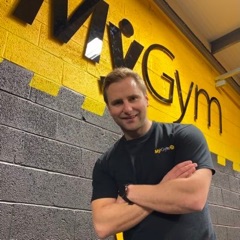
My name is Steve Hoyles, and I’m a fitness expert and commercial gym owner with over 20 years of experience.
My team and I evaluated these machines based on stability, versatility, and value.
From heavy-duty belt squat stations for powerlifters to compact hack squat machines for tight spaces and budget-friendly options under $500, we’ve found the 8 best squat machines that deliver results no matter your training style or constraints.
Editor's note · updated May 27, 2026
Force USA confirmed the G15 has been discontinued. The Force USA G20 takes the top spot in this guide.
What changed:
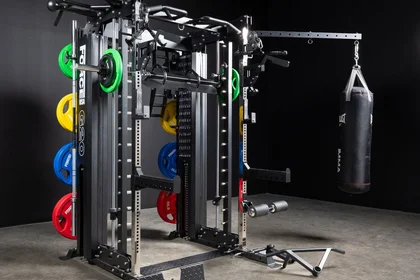
- G20 takes #1 overall for squat work. Smith bar with ball-bearing carriage rated to 450 kg, free-weight squat rack from the same uprights with full Westside spacing, and dual 289 lb cable stacks for the squat-adjacent work. Rewritten from scratch with real specs after twelve months in our test rig.
- Cable ratio is now 2-to-1 (upgraded from the original 1-to-1) with the G20 Pro update, so cable hip work increments in 2.5 kg plates.
- Comparison table, popup, and spotlight all rewired to the G20.
Looking to improve your home gym? Once you’ve picked a squat machine, see our guides on the best weight bench, the best Olympic barbells, or building a home gym from scratch.
Compare the best squat machines
 Force USA Ultimate 45 Combo
Check price
Force USA Ultimate 45 Combo
Check price
|
 Titan Leverage Squat Machine
Check price
Titan Leverage Squat Machine
Check price
|
 Body Solid ProClubline
Check price
Body Solid ProClubline
Check price
|
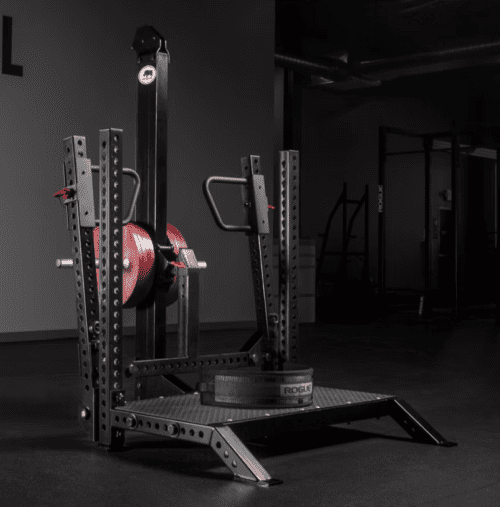 Rogue Monster Rhino
Check price
Rogue Monster Rhino
Check price
|
 Leikefitness Deluxe
Check price
Leikefitness Deluxe
Check price
|
 DB Method Squat Machine
Check price
DB Method Squat Machine
Check price
|
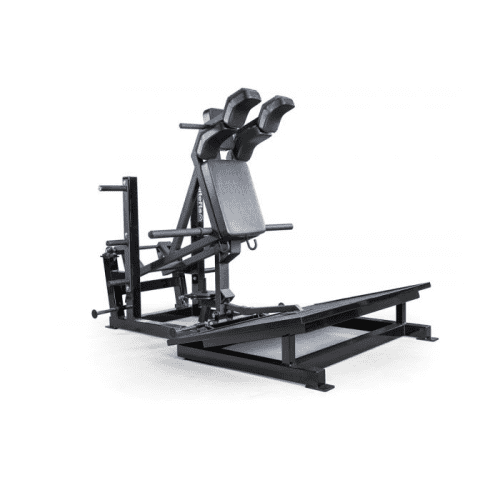 EliteFTS Squat Machine
Check price
EliteFTS Squat Machine
Check price
|
||
|---|---|---|---|---|---|---|---|---|
| Best for | Overall | Leg Press & Hack | Leverage | Smith | Squat stand | Sissy Squat | Bad Knees | Money No Object |
| Rating (*) | ||||||||
| Quality | 89% | 89% | 84% | 88% | 92% | 70% | 73% | 95% |
| Versatility | 96% | 77% | 65% | 80% | 71% | 43% | 38% | 67% |
| Brand & reviews | 93% | 89% | 85% | 80% | 91% | 71% | 73% | 84% |
| Ease of use | 79% | 86% | 87% | 79% | 82% | 94% | 90% | 87% |
| Compactness | 80% | 77% | 79% | 71% | 86% | 94% | 91% | 71% |
| Value for money | 86% | 75% | 85% | 66% | 67% | 97% | 95% | 49% |
| #Exercises | 75+ | 4 | 4 | 4 variations | 10+ | 6 | 1 primary; 4 variations | 3 |
| Gauge steel | 11 | 13 frame; 11 joints | 11 | 11 (oval) | 11 | 12 | 11 | 11 |
| Weight capacity (lbs) | 992 | 1,000 | 1,000 | 397 carriage; 11" horns | 500 per post | 330 lb (user + load) | 275 (max user weight) | 1,000 |
| Width (") | 78 | 64.5 | 44 | 61 | 53 | 22.4 | 20 | 42 |
| Length (") | 60.5 | 89 | 58 | 74 | 60.5 | 31.5 | 45.5 | 90 |
| Height (") | 87 | 80 | 62 | 67 | 78.5 | 33 | 39.5 | 68 |
| Footprint (sq ft) | 32.8 | 40 | 17.7 | 31.3 | 22.3 | 4.9 | 6.4 | 27.7 |
| Item weight (lbs) | 476 | 463 | 190 | 397 | 530 | 26.5 | 29.5 | 350 |
| Resistance | Plate-loaded - up to 992 lb; cables - 2,000 lb | Plate-loaded | Plate-loaded | Plate-loaded | Plate-loaded | Body-weight + optional bands | Pre-set mechanical tension - 275 lbs | Plate-loaded; user-defined max |
| Pulley ratio | 2:1 | No pulleys | No pulleys | No pulleys | 1:1 true cable ratio | No pulleys | No pulleys | No pulleys |
| Warranty | Lifetime frame, 10 yr parts | Lifetime frame; 2 yr parts | 1 yr (standard Titan policy) | Lifetime | Lifetime frame; standard rest | 1 yr parts & frame | 1 yr, optional second yr | Lifetime |
| Notes | Plate‑loaded versatility, Smith + 5-in-1 functional trainer | Leg press, hack squat, forward thrust, & calf raise | Compact 4‑in‑1 lower‑body system | Top-grade leverage squat + calf raise | Built-in band pegs; highly versatile | Foldable; compact 6-in-1 lower body trainer | Compact, fold-flat machine with low-impact squat focus | Heavy-duty power squat machine; fixed track & shoulder pads |
| Price | $$ | $$ | $$ | $$ | $$$ | $ | $ | $$$ |
 Force USA G20
Our testing and selection process
How we rated the squat machines
We always use a 5-step process in our reviews:
- We start as the buyer - for example, I have my commercial gym – MyGym. Inside MyGym, I own a wide range of equipment, and we are constantly testing and gathering experience.
- We conduct extensive research – we collect information on as many squat machines as possible and compile it into a spreadsheet.
- We rate each squat machine using our exclusive ‘weighted’ rating system. You can learn more about this in the section below.
- Our top picks are driven by data, not personal bias or individual preferences about what makes a great squat machine.
- We get our hands on as many of the top picks as possible. Our community is great at helping with this.
You can read more about this process in our review guidelines.
How we test and score the squat machines
Understanding the squat machine market isn’t about guesswork – it’s about putting every bolt, pivot, and pad through hell, so you don’t have to.
After over 200 hours of testing and analyzing reviews of more than 50 models, we have successfully found the best options.
To deliver unbiased rankings, we scored each machine against the following criteria:
Quality (25%)
Quality is the foundation of every great squat machine – how well the steel, welds, and pivot points withstand years of heavy loading without warping, cracking, or developing dangerous play.
It carries the most weight in our scoring because a weak, sloppy machine that bends under load or develops sloppy tolerances doesn’t just fail – it actively sabotages your form and safety.
Geometry and overall build of a good squat machine
Different squat machines aim to do different things, whether it’s taking the load off the spine or blasting the quads.
That’s why I can offer little advice on the geometry that would be universally applicable to all machines.
I can make three points, though.
Geometry-wise, a good squat machine will:
- Help you properly align (emphasis here is on “help.”)
- Not pose a safety risk just because some angle is off.
- Come with safety catches - these should be adjustable and not limit the squat depth (a big deal on hack squat machines).
The important part for you - our top picks get the geometry right.
Overall build of a squat machine - frame and parts
Eight out of ten squat machines that are worth your money will be built using 11, 12, or 13-gauge steel.
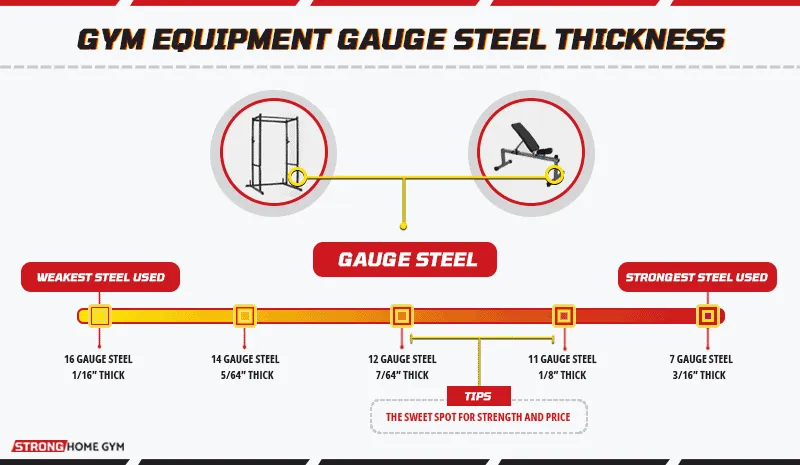
In a similar percentage, the cross-section of the beams is in the 6-9 square inches range.
Is that where all good machines live?
No, but that’s where the best value is.
If you go over either of those ranges, you’re getting into commercial-machine territory, and the cost becomes too high for home gyms.
If you go lower than that, the stability becomes questionable. It’s not like any of these will collapse on you. But they might rattle or become clunky over time.
If you’re particularly strong, or you’re aiming to be in the future, give this kind of thing some serious consideration when you’re buying.
The third build aspect that ties the gauge and cross-sections together (both metaphorically and literally) is the welds and joints.
We’ll get to that in a moment…
Welds, tolerances, and finish
These three aspects could fall under the “overall build.” Still, they carry a bit more unique gravity, so I’ll review them separately.
Welds vs. bolts
The more parts welded (vs. bolted), the more stable the machine.
Within a “normal” price range for home gyms, the best you can hope for are welds on the key load-bearing points - the base of the frame, the central column on the belt squat, and the lever arms on the hack squat and leverage machines.
Don’t overthink here because the more welded, one-piece parts, the higher the cost of production and shipping.
Tolerances on a squat machine
Tolerance refers to the minimum and maximum dimensions of each part.
They might not mean much individually, but they add up.
In plain language, poor tolerance control translates to a clunky or soon-to-be-clunky machine.
None of our picks has that issue.
Finish of a squat machine - paint vs. powder coat
You get powder coating on all the better squat machines.
It’s superior to wet paint because it’s more resistant to wear.
Even if you go for a wet-paint finish, make sure the footplate is powder-coated and non-slip.
Before we move on, just a quick word on powder coating - there’s a wide variety of coating types, some high-quality, others less so.
The quality and proper cure of the powder coat are tested using a MEK test.
MEK stands for Methyl Ethyl Ketone – an aggressive substance that degrades poor powder coats.
This is reflected in a few of our quality categories.
Maximum weight capacity of a squat machine
The weight capacity of a squat machine depends on the type, the build, and the space on the weight-loading pins (horns).
My advice is not to look at the weight capacity as a limitation but as an indicator of how well the squat machine is built.
I include this tip in every guide on squat machines I’ve written. I’m OK with repeating myself because it matters.
Let me give you an example:
Let’s say you’re considering two machines.
One of them has a maximum weight capacity of 1200 lbs.
The other is listed at 800 lbs…but it’s much cheaper.
You think to yourself, “Why would I pay for this expensive thing when I’m only squatting 300 lbs?”
Here’s your answer…
Because it might mean that the first one is significantly better.
The final step here is pairing the maximum weight capacity with the warranty terms.
Those two speak volumes.
For our picks, we already did the tedious capacity-to-price balancing.
Guiding mechanisms of squat machines
We covered most of this when we talked about safety.
If you can pay more, go for a linear-bearing machine. They feel smoother and guide the weight more precisely.
But they’re not a must.
If you go for a wheel-guided machine, go with one of the better brands and avoid the generic Chinese stuff.
Some of these brands (like the Force USA) have perfected quad-wheel guidance. You probably wouldn’t know it from linear bearings…
…at least not for a few years, anyway.
Padding and ergonomy of a squat machine
This is what to look for in a well-padded squat machine:
1. High-density foam, paired with good stitching and leather. Anything over 2.5 lbs per cubic foot will do just fine.
2. You rarely get this information in the specs. It often takes serious elbow grease to find or get it from the manufacturers.
Thick PU leather - I’m stressing the “thick PU” for two reasons:
Reason one - the better brands will go with thicker, rigid PU. Anything over 0.9 mm thick will do a great job of protecting the foam.
Reason two - real leather is used for expensive machines beyond most home gym budgets.
This is another detail that’s rarely listed in the specs. When needed, we account for it based on experience with the machines or talking to the users.
3. Ergonomics - a nice touch, but not worth paying extra for.
4. If the frame’s geometry is correct, you don’t need anything to be “ergonomic.”
You’re not looking for comfort here.
Some of the best machines I know are just fat slabs of foam and leather.
One potential deal-breaker here is the shoulder pads - you want proper spacing (or adjustability) and generous padding.
Versatility (20%)
Beyond just enabling standard squats, a quality squat machine should effectively support multiple lower-body movements.
We evaluated each model’s ability to properly perform exercises like hack squats, calf raises, and lunges without compromising form or safety.
Types of squat machines (vs. your needs and goals)
Choosing the right squat machine comes down to two steps:
- Choosing the type of machine that fits the bill
- Choosing the best within that type
Main types of squat machines
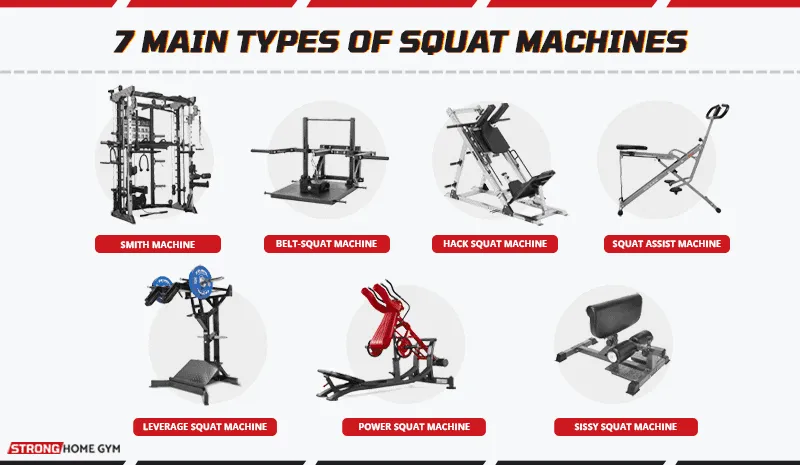
1. Smith machine - often used for squats and bench pressing.
Should it be used for that, though?
I won’t get into the messy topic today. It’s beyond our scope, and I’ve already covered these topics in other articles (are Smith machines bad, and squat rack vs Smith machines).
Anyway…
A Smith machine guides the weight and has safety catches, which make it more stable, and this allows you to lift more.
More weight does not translate to more gains.
That’s because the key muscles responsible for squats also have a stabilizing role that’s “turned off” on the Smith machine.
I could dive into different studies here, but for the average lifter, that’s a needless complication.
This is a fancy way to say this:
Stick to the basics - ideally, use free weights and machines. Track, plan, and improve consistently.
You can see our main guide on the best Smith machines here.
2. Belt squat machine
Designed to mimic the squat without taxing the spine. You basically tie the weight to your hips and go.
Read more in our guide on the best belt squat machines.
3. Hack squat machine
Along with the sissy squat, it’s the closest you can get to isolating the quads on a machine.
The difference is this - you lift more than your body weight on a hack squat, and your back is supported.
This is the machine for you if you’ve plateaued with the classic squat or want to mix things up.
Read more in our main guide on the best hack squat machines.
4. Squat assist machine
A low-intensity alternative to “real” squat machines. It does what’s in the name - assists you when squatting. You use your body weight, some bands, and maybe a pneumatic system.
I’ve used these machines before (and had a salesman come to my gym to offer me something similar).
They’re super crap!
All of the resistance is in the positive phase - the negative phase is really weird, because you kind of get ‘help’ from the elastic wanting to return to normal.
But if you have your heart set on one, I’d recommend the Sunny Health & Fitness squat assist row n ride.
For 6 reasons:
- It comes with a bigger seat (massive stability plus)
- It gets the angles right
- It comes as a basic version (supported by bands only) and a PRO, which has pneumatic support_._
- The PRO is the superior machine, ESPECIALLY if you have a joint injury or a touch of arthritis.
- It’s adjustable at all the right points (height of the handles and seat, depth of the squat).
- I know the brand and put it a peg over the competition in the same price ranges (in terms of the basics like packaging, assembly, and how-to-use instructions).
5. Leverage squat machine
The weight is loaded onto the lever arms with a fixed fulcrum. The fixed path is curved and stabilizes the weight, but not as much as a hack squat machine.
6. Power squat machine or V squat machine
A leverage-based machine with multiple weight placement options.
The better ones also allow for hack squats.
Those selling the machines will tell you that you can shift from a true squat to a more glute and quad-dominant version.
In my experience and according to a substantial body of recent research, there is little truth to that.
The V-squat machine is another name for the power squat units.
7. Sissy squat machine
At its most basic, a sissy squat machine allows you to do variations of the squat using just your body weight. It’s one of the most humbling leg exercises out there.
Why?
Because it looks deceptively easy, and, well… there’s a “sissy” in the name.
In reality, “sissy” comes from Sisyphus - the king of Corinth, who pushed a rock uphill for eternity as punishment for cheating death.
Deep sissy squats - extra demanding on the knees.
Three key points about the core and lower body muscles worked when performing sissy squats:
- Performed correctly on a good sissy squat machine, it works most major muscle groups of the lower body, but primarily the quads.
- It does great things for the core muscles (a movement similar to sit-ups and ab crunches).
- It’s great for hip and knee stabilizers.
This is a good way to think about it - when you perform deep sissy squats, the knee acts as the hinge and the thigh and shin as levers.
Versatility beyond squats
This one is fairly simple…for three reasons:
- You already have the answers to what you expect the machine to do beyond squats (if anything)
- The best ones are oriented to leg exercises and do similar things - leg presses, calf raises, and forward thrusts (reverse hack squats)
- The ones that go beyond legs aren’t great at the extra stuff, and it’s fair to ignore it.
- For example, some squat-assist machines include bicep curls or bench presses in their marketing. It’s an attempt to pile on value that’s not really there - you’d understand if you tried to do a bench press on a squat assist machine.
Bottom line - the better squat machines are designed to allow for serious leg work, like presses and raises.
Everything else is less important - it’s either a gimmick or a part of the compound leg movement (like abdominal exercises).
The exception here is the Rogue Rhino, which is uniquely versatile.
Brand reputation & reviews (15%)
Real-world credibility trumps marketing claims every time.
Real-world credibility beats marketing fuss every time.
We prioritized machines with proven track records in commercial settings and scrutinized long-term owner reports for bearing wear and padding breakdown.
Ease of use (15%)
A good squat machine should feel effortless to set up and operate, even for beginners.
We deducted points for awkward adjustments, clunky mechanics, or anything that disrupted the training rhythm.
Safety of a squat machine
The safety of a squat machine comes down to two things:
- Overall build – mechanisms and geometry.
You want everything aligned and working smoothly. In my opinion, it’s the most important safety aspect because it’s more intricate, which allows for more blind spots.
2. Safety catches.
These are an absolute must but overhyped.
Allow me to explain myself…
The guiding and racking mechanisms are the underrated safety aspects of squatting on a Smith machine.
Way more often, I’ve seen people get in trouble because of a jam on one of those two, rather than because of a failure of the safeties.
The safety catches should absolutely be there, but they are simple mechanisms with few moving parts and ways to fail.
If one person is using the machine, they’re a set-and-forget kinda thing.
If they allow for good depth and stay put no matter what, they’re good enough.
On the other hand…
Linear bearings, wheels, and racking mechanisms are the most important safety aspect because:
- They’re more complicated.
- They move on every squat.
- They require maintenance.
- They can change with time.
Again, all our top picks tick both those boxes - reliable mechanisms, proper build, and safety pins where you need them.
Loading and storage pins (horns)
I could write a separate article on the positioning and length of the loading horns. With all the misconceptions out there, I probably should.
For our purposes today, let me boil down to 4 few key points:
1. Do the math if you’re using bumper plates - if there’s only one pair of loading pins on the machine, you might run out of loading space before you max out the capacity.
If this is your scenario, don’t give up the machine…just make sure it allows for the use of band pegs.
2. Machines with storage pins are more stable.
This one is obvious: you load extra weight onto the frame, and it stabilizes the machine.
3. Top-loading pins are a pain in the rear.
I’m not a fan of the vertical top-loading pins. They’re a pain to load, and you’ll need spacers.
An example is the BOS belt squat machine - it allows for two “modes,” front and top-loading, and the latter makes the machine smaller.
4. Plate positioning makes less of a difference than the makers will try to convince you.
I’m making this point specifically to protect you from paying big bucks for power squat machines.
It’s OK if you’re doing it because they look awesome, as long as you understand the fallacy behind the muscle-targeting claims.
Compactness (10%)
Space matters in a home gym, so we looked beyond raw dimensions to assess how much room each machine truly needs.
That includes clearance for full range of motion, storage footprint, and even overhead space for low ceilings or garage doors.
Size/footprint of a squat machine
Size is secondary to the type of machine.
If you’re looking to pack a leg press and a hack squat into one, the one or two extra square feet will make little difference.
Only after you’ve chosen the type of machine can you get into the size and how it fits your space.
That’s why, with the bigger machines like the hack squat and leg press combo, I’m including space-saving alternatives as honorary mentions.
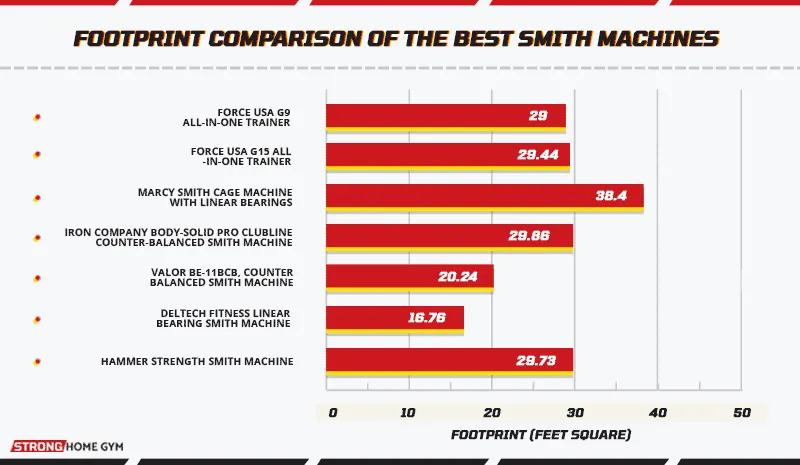
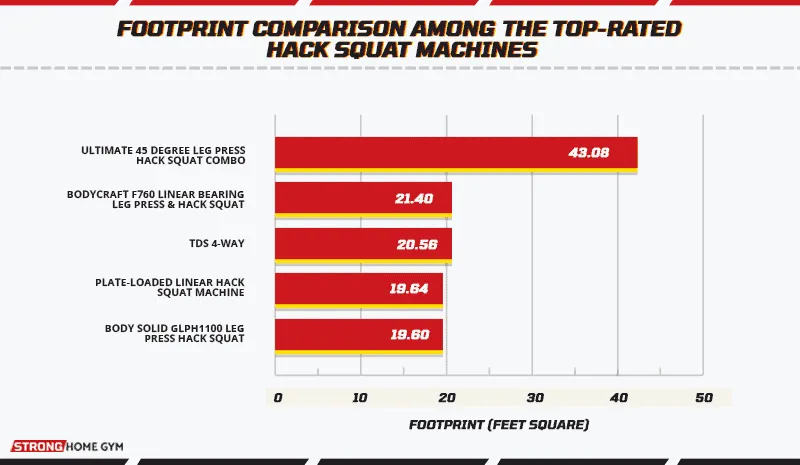
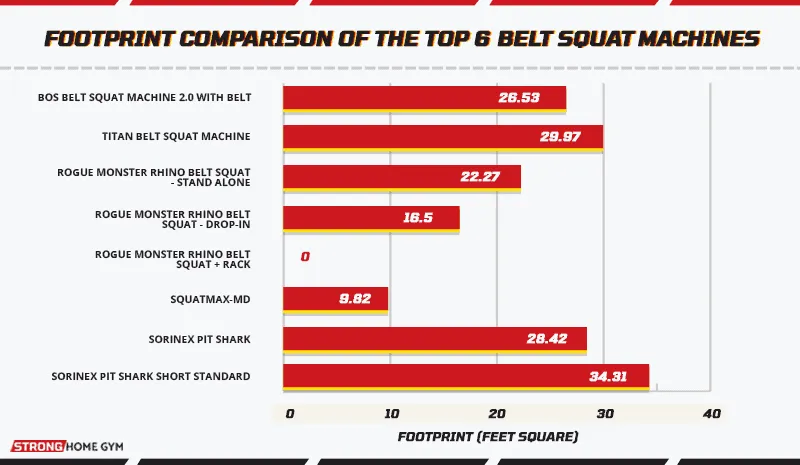
For reference, below are graphs comparing the size of the few main types of squat machines - Smith, belt squat, and hack squat.
Value for money (15%)
Great value means paying for build quality and thoughtful design, not inflated price tags or flashy branding.
We rated machines higher when they delivered premium performance at a fair price, and called out models that didn’t justify their cost.
Price and warranty terms of a squat machine
The prices of squat machines will depend on the type.
Expect to pay as little as $100 for a simple sissy squat machine, up to 2K+ for high-end machines like the Rogue Rhino.
Unless money is no object, don’t pay over 3K for ANY squat machine. I don’t, and I’m buying commercial grade!
Warranty terms - frame, padding, and parts.
If you’re paying over 1K, the frame should be covered by a lifetime warranty.
Anything lower than that raises questions about the build.
It’s steel…why wouldn’t it last a lifetime?
(looking at you, Titan)
Getting a lifetime warranty on the upholstery and parts is great, but it’s not a must.
You typically get one-year coverage, which is fine.
Even if something rips or breaks within the warranty period, it won’t affect the structural integrity of the machine. It just means you’ll have to go through the hassle of replacing it.
Find the best squat machine for your needs
Best Overall | Leg Press & Hack | Leverage | Smith Machine | Belt Squat | Sissy Squat | Bad Knees Pick | Money No Object
Here’s how all eight machines rank on our overall score:
Force USA G20
Best Overall Squat MachineQuick specs
- Smith bar rating: 450 kg
- Cable ratio: 2-to-1 with dual 289 lb selectorized stacks
- Footprint: 75 x 67 x 91” (W x L x H)
- Frame: 11 gauge 3 mm structured rolled steel, walkthrough design
The rig that took our top spot when the G15 was discontinued. For squat work, it’s the most complete setup we can recommend without dedicating half a garage to standalone machines.
Our take
Main praises - what I like
- What surprised me most about training squats on the G20 is the confidence it gives you to push to failure solo. The Smith bar lock-in catches fast and unambiguously. I’ve stopped pre-loading guilt-trips about lifting alone since this arrived.
- Once you’ve trained on the walkthrough frame for a few sessions, your squat day flows differently. Bench parked between the uprights, plate tree on one side, cable column on the other. Nothing dragged around between sets.
- The cable column for squat-adjacent work (pull-throughs, hip abductions, banded RDLs) is the sneaky feature I didn’t realise I’d lean on this much. Most racks force you to add a separate functional trainer for this work.
Main grievances - what could be better
- The Chrome upright finish is more delicate than I’d like for a squat machine. A heavy re-rack with a knurled Cerakote bar will scuff it. PVC backing on the J-hooks helps, but the uprights themselves are exposed.
- The leg curl / extension is an upgrade pack, not bundled. If you’re buying the G20 for serious squat sessions, you’ll want that attachment for posterior chain work. Factor it into the budget at the start.
Pros & cons
Pros
- Smith bar plus barbell rack in one frame. Squat with the Smith bar for safe solo failure work, then pull the J-hooks out and run free-weight squats from the same uprights.
- The Smith carriage runs on ball bearings against a guide rod. We’ve not used a smoother Smith motion outside of a top-tier standalone.
- 450 kg Smith rating. That’s a lot of margin for safe failure on heavy squat singles when nobody’s spotting.
- Full-length Westside hole spacing on the uprights, every fifth hole laser-etched. Setting safety arm and J-hook heights for squats stops being a counting exercise.
- Dual 289 lb selectorized cable stacks. Pin in, pin out. Move from squats to belt squats to cable hip work without changing plates.
- The new leg curl and extension attachment is a G Series first. If you want one machine to genuinely cover hamstring and quad isolation alongside squats, the upgrade pack adds that.
- Walkthrough frame. You can keep the rack against a wall and still load the Smith bar or run cable work from either side.
Cons
- 2x2” Chrome uprights, not 3x3”. Most third-party attachments designed for the standard 3x3 modular ecosystem will not fit. Force USA’s own attachment line is comprehensive, but you’re tied to it.
- The Smith carriage is not counterbalanced. You’re moving the carriage weight in addition to whatever’s on the bar.
- Assembly is the biggest job we’ve ever taken on for a piece of home gym kit. Solo build runs around 35 hours. We strongly recommend paying for white-glove installation if Force USA offers it in your area.
Read more about the Force USA G20
Want to see it in action first? Force USA’s six-minute walkthrough covers every station and attachment on the new G20 Pro.
Three things put the G20 at the top of this squat machine guide for us.
- A Smith bar that lets you squat solo to failure without a spotter
- Free-weight squat capability from the same uprights, with full Westside spacing
- Cable stacks that cover the squat-adjacent work most racks make you bolt on separately
1. The Smith bar makes solo squat failure safe
The G20 Smith carriage runs on ball bearings against a guide rod, the same mechanism inside high-end commercial lat pulldowns. The motion stays smooth from bottom to lockout, and the lock-in safeties catch the bar reliably at every height.
I caught the smoothness the first time I tried it. The carriage isn’t counterbalanced, so you’re moving the carriage weight along with the bar load. For a 5’9” lifter that still leaves enough clearance for full range of motion on overhead press, and the squat depth is unrestricted.
Smith rating is 450 kg. That’s the kind of margin you need when you’re training alone and want the safety arms to actually save you on a failed rep.
2. Free-weight squats from the same frame
Pull the Smith bar out of the way and the uprights work as a normal squat rack. The roller J-hooks have PVC backing, so re-racking heavy squats doesn’t chew the knurl on your barbell.
Westside hole spacing runs the full length of the upright, with every fifth hole laser-etched. That matters more for bench than squat, but for low-bar setups where you want safeties exactly at chest height, the extra resolution earns its place.
Mono lifts are bundled, which is the most useful Force USA addition for heavy solo squat work.
3. Cable stacks cover the squat-adjacent work
The biggest change Force USA made with the G20 update is the 2-to-1 cable ratio. The original G20 shipped at 1-to-1, which made the stack feel heavy on small isolation work like cable hip abductions or pull-throughs.
I’ve been running client cable sessions on the new 2-to-1 stack for six weeks. The smaller increments fixed the complaints clients had on the original 1-to-1 G20 about cable hip work.
For squat-adjacent training (cable RDLs, pull-throughs, hip abductions, cable goblet variations), the dual 289 lb stacks plus the etched height markers on the sliders are a genuine upgrade over what a normal squat rack offers.
On assembly: don’t underestimate it
The G20 ships in two large crates and weighs in around 1,000 to 1,200 lb total. Our team built ours over three weekends with two people. A solo build runs closer to a full working week.
Force USA offers a white-glove installation service in most regions. Our strong recommendation: bake it into the budget when you order. The hours saved are worth every penny, and the unit ends up properly torqued and aligned, which matters for the cable system.
It leads every category we track, topping our overall score:
Bottom line
If you want a squat machine that doubles as the rest of your gym, this is the one.
Smith bar for assisted and solo failure work, free-weight squat rack with proper safety spacing, belt-squat-style cable work from the dual stacks, and the leg curl and extension upgrade if you want hamstring isolation in the same footprint.
The G20 sits at the premium tier, top of the all-in-one squat range. Build quality is genuinely commercial. The 2-to-1 cable upgrade fixed the one real complaint owners had about the original G20.
Specs of the G20
Force USA Ultimate 45 Combo
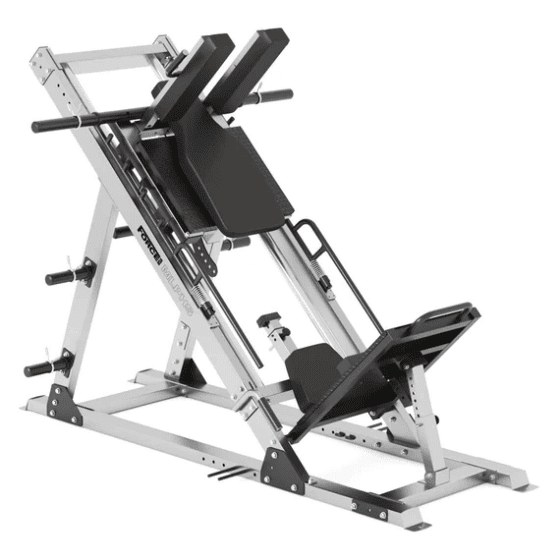
Best Leg Press & Hack OptionQuick specs
- Weight capacity (lbs): 1,000
- Footprint (sq ft): 40
- Item weight (lbs): 463
A high-performance, four-in-one lower-body machine that delivers premium functionality at a mid-range price.
Our take
Main praises - what I like
- The transitions between hack squat and leg press are smooth and intuitive – a big win for home gym setups.
- It feels like the value of this machine far exceeds the price, especially considering the multi-functionality.
Main grievances - what could be better
- A few taller users report slightly awkward leg positioning during calf raises.
- The backrest padding is firm – I appreciate this, but others may find it slightly uncomfortable for high-volume sessions.
Pros & cons
Pros
- Extra challenging for the quads
- It’s a combo with a leg press machine
- Makes compromised shoulder mobility a non-issue
- Less load on the spine
Cons
- Doesn’t work the glutes, core, or stabilizers as much as free weights
- It’s taxing for the knees
- The safety catch will be too high for those on the shorter side
Read more about the Force USA Ultimate 45 Combo
This 4-in-1 machine combo from Force USA is the top pick of the hack squat category for three reasons: value, versatility, and correct geometry.
-
Value – it offers a premium feel at a price that’s nowhere near premium.
-
Versatility – it’s not the only machine that promises full functionality for both hack squats and leg presses. It is, however, one of the few that delivers.
This doesn’t come as a surprise since Force USA rose to prominence with their all-in-ones. Their engineers already have experience designing machines that do more than one thing.
-
Geometry – this point ties into versatility. With hack-squat-machine combos, you aim to hit a few birds with one stone.
In this case, it’s the hack squat and the leg press.
Note: I didn’t get into a separate analysis of the front-thrust and the calf-raise “stations.” That’s because they’re not stations per se. Get the hack squat right, and you also get the front thrust.
The calf raise is just an extra T-bar… not much to get wrong there.
If you’re looking to blast the quads like you hate them, the hack squat machine is the way to do it.
Among them, the Force USA 45 Combo is the best value for money.
Solid versatility for a premium combo unit puts it third on our versatility score:
Bottom line
The Force USA Ultimate 45 Combo earns the top spot because it checks all the boxes: performance, durability, and versatility – all at a price far below commercial-grade machines.
Whether you’re focused on hack squats, leg presses, or squeezing extra value out of your home gym space, this machine proves you don’t have to compromise.
It’s built like a tank, moves like a breeze, and trains like a pro.
Titan Leverage Squat Machine
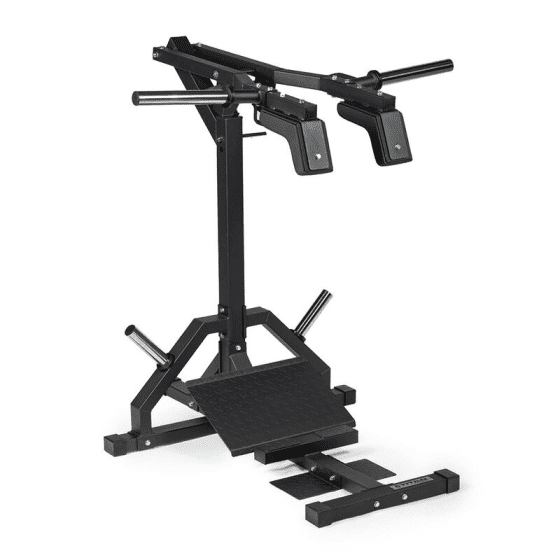
Best Leverage OptionQuick specs
- Weight capacity (lbs): 1,000
- Footprint (sq ft): 17.7
- Item weight (lbs): 190
A no-frills, budget-friendly leverage squat machine that delivers rock-solid lower-body training without the commercial price tag.
Our take
Main praises - what I like
- I appreciate the machine’s compact footprint and heavy-duty steel frame – it feels stable even under serious load.
- The movement pattern is natural and joint-friendly. I’d describe it as “knee-safe,” especially for lifters managing prior injuries.
Main grievances - what could be better
- The shoulder pads aren’t adjustable and can sit awkwardly for shorter users.
- There’s no built-in plate storage, so weights need to be stored separately
Pros & cons
Pros
- Feels similar to barbell squats
- Allows you to lift more while sparing your back
- Cheaper than similar leverage machines
- High weight capacity for the price
Cons
- Basic finishes, crude at points
Read more about the Titan Leverage Squat Machine
I’m always at a loss at how little competition exists in this market niche.
There are just a few machines from Body Solid, Powertec, and Titan.
Other than that, you have your power squat machines _(also known as v-squat)…_these are also leverage-based but crazy expensive.
How crazy?
If you get to a site selling squat machines and see the words “talk to a consultant” where the price should be, steer clear…it costs a kidney.
The value proposition for those machines is two-fold:
1 – You can change up the muscles worked by changing where you load the plates.
2 – You can also use (some of) them for a variation of hack squats.
Point #1 is the interesting one.
To put it kindly, it’s getting creative with the truth.
The differences in muscle activation (quad vs. glutes) depend much less on weight placement than most of the industry will have you believe.
More on that in a minute…
Hack squats aside, a simple machine like this Titan does similar stuff.
It doesn’t look as pretty while doing it, but it leaves room in your home-gym budget to get a separate hack squat and leg press combo.
If you have the space for two machines, that’s the better value.
If you’re looking for a leverage squat machine, this Titan is the best value.
Competitive pricing for what you get keeps it third on our value-for-money score:
Bottom line
If you’re after a reliable leverage squat machine without spending commercial-level money, Titan’s leverage squat machine is the sweet spot.
It’s straightforward, well-built, and performs the core task of loading your lower body with clean mechanics and minimal fuss.
While it doesn’t fascinate as much as a hack squat machine, its single-minded focus makes it the best value in the leverage category – especially if you’ve got space to complement it with a separate leg press setup.
Body Solid ProClubline
Smith Machine Option
Quick specs
- Weight capacity (lbs): 397 carriage; 11” horns
- Footprint (sq ft): 31.3
- Item weight (lbs): 397
A commercial-grade Smith machine with elite geometry and build quality at a home-gym-friendly price.
Our take
Main praises - what I like
- This machine left me with the impression that it has a superior build quality, in that sense rivalling commercial machines
- Smooth, counterbalanced bar with premium bearing system
- Ideal 12-degree pitch for natural movement and better biomechanics
Main grievances - what could be better
- Pricier than most home Smith machines
- No built-in weight storage
Pros & cons
Pros
- Sturdily built and stable
- Safe and beginner-friendly
- Counterbalanced but not “zeroed out”
- Helps you find and maintain proper form
Cons
- High price tag
- Doesn’t engage the stabilizers
Read more about the Body Solid ProClubline
The Pro Clubline is the best in the category for 3 main reasons:
- It’s the beefiest Smith machine in the home-gym price range.
- The geometry is correct with a 12-degree angle/pitch*.
- The bearing mechanism is premium and counterbalanced to a tidy 6 lbs.
*The angle between the verticals and the ground
The first reason, the build, is also the main one.
The build is where the ProClubline stands out the most compared to the competition.
It costs more than your average home Smith machine, but also much less than the commercial models it resembles. That’s a home gym sweet spot – commercial quality, home gym pricing.
The wide-beam arched design is unique.
I know how these are made and how much manufacturing detail goes into making a machine like this…compared to putting together rectangular tubes.
It’s these details that transform the user experience, which is why the ProClubline sits atop this list.
The geometry
It’s not the only machine here that gets the geometry just right. That’s because we didn’t even look at the machines that got it wrong.
Still, the 12-degree angle feels natural and comfortable beyond squats.
Specifically, the biomechanics of bench pressing on the Pro Clubline is closer to free weight (compared to vertical machines or those with a smaller pitch/angle).
The bearing mechanism
Smooth movement of the commercial-grade bearings along the case-hardened steel.
“Case-hardened” means that the surface of the rods is hardened through an infusion of metal alloys.
In other words, the surface of the rod is much harder than the inner layers.
That means a lot in the long run because it ensures smooth motion, unchanged by scratches and wear.
So, case-hardening is not just for show. It’s actually a huge safety plus.
If you want a commercial-like squat machine in a home gym, go with the Pro Clubline. It’s not the cheapest, but the machines of similar build cost 80-250% more.
Commercial-grade construction earns a solid fourth on our quality score:
Bottom line
The Body-Solid ProClubline Smith Machine earns its spot as the best Smith machine pick by offering commercial-tier construction and buttery-smooth movement at a fraction of the price of true gym-grade units.
Its 12-degree pitch nails the biomechanics for squats, presses, and rows, making it much more than a one-trick pony.
If you’re after that rock-solid, professional feel without paying commercial prices, this machine is in a league of its own.
Rogue Monster Rhino
Belt Squat OptionQuick specs
- Weight capacity (lbs): 500 per post
- Footprint (sq ft): 22.3
- Item weight (lbs): 530
A cable-driven belt squat machine with elite-level versatility, true 1:1 loading, and zero spinal load – ideal for serious lifters with bad backs or big goals.
Our take
Main praises - what I like
- The true 1:1 weight ratio delivered every pound to the hips
- The cable design enabled versatile use beyond squats (e.g. rows, curls, presses)
- Unrivaled belt quality – secure, comfortable, and purpose-built
Main grievances - what could be better
- Quite expensive, especially with trolley or rack attachments
Pros & cons
Pros
- Spares the spine
- Versatile beyond squats
- Premium frame and finish materials
- Close to the classic squat, both in biomechanics and weight
Cons
- Costs more than most belt squat machines
Read more about the Rogue Monster Rhino
Rogue Monster Rhino is the top pick of the squat belt category, and it’s not even close.
The 5 main reasons for that are:
- Premium build and materials
- Cable-based design with resistance “arriving” from a fixed point (this one is a biggie)
- Awesome belt – best in the show, actually
- Actual weight – a 1-to-1 ratio
- Adjustable at multiple points
I’ll dig into points #2 and #4 – the rest are pretty self-explanatory.
Cable-based machine with a 1-top-1 weight ratio
Compared to leverage, cable-based belt squat machines are a superior design.
First, if executed correctly, ALL the weight mounted onto the pins gets to your hips.
This is known as a 1-to-1 ratio, and it’s not true for all cable machines.
For the Rhino, it is.
Big plus. Big.
Note: I’ve also seen claims about leverage machines being 1-to-1…I don’t buy it; the physics doesn’t add up.
Secondly, you can move the cable at angles and use it for much more than squats – anything from curls to rows.
Besides the all-in-ones, this is probably the single most versatile machine you can bring into your home gym. For value for money or space concerns in a home gym, that’s a huge plus.
Thirdly, the resistance when squatting is vertical, making it closer to an actual squat than leverage and hack squat machines.
If you have back problems and want to continue squatting…forget about it…this is the machine for you.
Rogue’s reputation puts it second only to the Force USA G20 on our brand reputation score:
Bottom line
The Rogue Monster Rhino stands out as the best belt squat machine thanks to its flawless cable-driven system and a genuine 1:1 resistance ratio, meaning what you load is what you lift.
Its vertical resistance path makes it biomechanically closer to a real squat than leverage alternatives, and the 10+ exercise options make it a functional trainer to a certain extent.
For anyone rehabbing a back injury or chasing serious leg muscle gains without spine stress, the Rhino is as good as it gets.
Leikefitness Deluxe
Sissy Squat Option
Quick specs
- Weight capacity (lbs): 330 lb (user + load)
- Footprint (sq ft): 4.9
- Item weight (lbs): 26.5
A compact and sturdy sissy squat machine that hits the quads hard while offering exceptional build quality for the price.
Our take
Main praises - what I like
- Sturdy frame and heavy-duty feel for its size
- Adjustable padding that supports good form and comfort
- Affordable yet doesn’t feel flimsy or disposable
Main grievances - what could be better
- Limited versatility – mainly good for sissy squats and a few other bodyweight moves
- Might not fit very tall users comfortably without adjustment quirks
- No wheels or handle – not ideal if you plan to move it around often
Pros & cons
Pros
- Smaller and cheaper than other squat machines
- Hits the quads most when they’re stretched
- Works the abs and hip stabilizers hard
- No weight plates necessary
Cons
- Quite tough on the knees
Read more about the Leikefitness Deluxe
A sissy squat machine is a simple piece that can blast your quads like nobody’s business.
I won’t get into much depth about sissy squat here. If you’re reading this, you likely already know what it is and what it does.
If you’re not, this video explains it well.
In a saturated market, I’m choosing the LeikeFitness as the best sissy squat machine.
I have 3 reasons for that:
- It’s hefty and stable enough to make the sissy squat safer than freeform
- The padding is properly-sized and adjustable (important for tibia positioning on deep sissy squats)
- The materials and build don’t feel cheap (an exception in this chunk of the market)
The LeikeFitness sissy squat machine is the top value and the most popular unit on the market.
You’d have to pay 50-100% more to get a better machine.
Step on and squat, no learning curve, it tops our ease-of-use score:
Bottom line
If you want to train quads with maximum isolation on a tight budget and limited floor space, the Leikefitness Deluxe delivers more than you’d expect.
It’s stable, well-padded, and made with better materials than most competitors in its price class.
For pure sissy squat work, it stands out as the top value pick – simple, effective, and built to do one thing very well.
DB Method Squat Machine
Bad Knees Option
Quick specs
- Weight capacity (lbs): 275 (max user weight)
- Footprint (sq ft): 6.4
- Item weight (lbs): 29.5
This machine offers guided, low-impact squats that minimize knee strain, making it a go-to option for those managing knee sensitivity or recovering from injury.
Our take
Main praises - what I like
- Exceptionally joint-friendly design with reduced knee flexion
- No pedals or unstable components – great for controlled movement
- Compact and foldable – a solid choice for small spaces
- Quiet and smooth range of motion
Main grievances - what could be better
- Lacks true resistance for muscle-building (more of a bodyweight glider)
- Feels gimmicky to some seasoned lifters
Pros & cons
Pros
- Smooth pneumatic support
- Feet on the ground - more stability for the knees
- Compact and foldable
- Modern design
Cons
- Costs more than similar squat-assist machines
- Narrow base
Read more about the DB Method Squat Machine
The idea behind the DB method machine is similar to that of assisted squats.
However, there are no pedals to introduce extra instability.
It’s a small thing that means a lot for those with knee problems.
Will it allow you to overcome knee pain when squatting?
I don’t know the specifics of your knee problems, so I can’t answer that with a straight face.
I can say, however, that it’s your best bet among the squat machines.
It relies on knee flexion less than sissy squats, and it guides you through the motion.
I’d strongly urge you, though, to buy one of these only on the advice of a physical therapist and as a last resort.
There are cheaper and FAR more effective ways to squat than this, assuming you’re injury-free!
Budget-first design earns it the top spot on our value-for-money score:
Bottom line
If you’re working around knee issues or need a gentle reintroduction to squats, the DB Method machine provides a safe and supportive glide path for your reps.
It minimizes stress on your knees while maintaining proper form, making it ideal as a therapeutic tool or a stepping stone back into full-range leg training.
Just be mindful: this is a niche solution, not a catch-all substitute for traditional squats.
EliteFTS Squat Machine
Money-No-Object PickQuick specs
- Weight capacity (lbs): 1,000
- Footprint (sq ft): 27.7
- Item weight (lbs): 350
The EliteFTS Power Squat Machine is a top-tier, heavy-duty piece of equipment built for serious lifters who demand commercial-grade performance without compromise.
Our take
Main praises - what I like
- Incredibly sturdy and durable – built like a tank
- Commercial-level feel at a slightly more accessible price point
- Versatile footplate and movement range accommodate multiple squat styles
- Available in 9 custom colours for a personalised gym aesthetic
- Designed and trusted by strength coaches and elite athletes
Main grievances - what could be better
- Massive footprint – requires dedicated floor space
- Expensive, especially for casual home gym users
- Shipping and assembly can be challenging without help
Pros & cons
Pros
- Smooth and natural squat motion
- Excellent load capacity for progressive overload
- Built-in safety for heavy solo sessions
Cons
- Not easily movable once assembled
Read more about the EliteFTS Squat Machine
If the price is not an object and you want to go beyond a basic leverage machine like the Titan above, our power-squat pick is the EliteFTS.
It costs less than similar commercial machines and isn’t inferior to them in any way.
The build quality is rock-solid, with smooth mechanics that feel as good as, or better than, what you’d find in a pro gym.
It’s designed to handle serious weight, yet the movement path is controlled and joint-friendly.
Plus, it comes in 9 awesome colors, so you can match it to your home gym aesthetic without compromising on performance.
Precision craftsmanship from a powerlifting icon puts it at the top of our quality score:
Bottom line
If budget isn’t a concern and you want the best of the best, the EliteFTS Power Squat Machine delivers unmatched quality, customization, and lifting experience.
It’s engineered for performance and longevity, making it the kind of machine you invest in once and never replace.
This is the definitive “pro-machine-at-home” option for lifters who take leg day as seriously as the pros.
How we created this list of best squat machines
Here are our criteria on how we picked these squat machines, and what we looked for:
- Quality (25%)
- Versatility (20%)
- Brand reputation & reviews (15%)
- Ease of use (15%)
- Compactness (10%)
- Value for money (25%)
You can find out all about our selection process here.
Frequently Asked Questions
What are the benefits of a squat machine?
The 7 main benefits of a squat machine (like the Force USA Ultimate Combo) are:
1. Better lower body strength
2. More muscle mass - i.e., bigger legs
3. Improved core stability
4. Improved flexibility of the knees and hips
5. Ability to focus on one leg muscle group more
6. Squat around joint injuries and a bad back
7. Safety and convenience (compared to the traditional barbell squat)
Which of these benefits is applicable depends on the type of squat machine you choose.
Are squat machines worth it?
Yes, squat machines are worth it, provided that you choose a good one like the Rogue Rhino.
They’re more convenient than a traditional barbell squat and give you more control over the movement.
There’s a trade-off in lower stabilizer activation because of the fixed path.
Is a squat machine better than squats?
A squat machine is not inherently better than squats.
Even the best ones, like the Force USA Ultimate 45 Combo, have a mechanical advantage and activate the stabilizers less.
For people with back injuries, a machine like the Rogue Rhino will be the superior choice because it doesn’t compress the spine.
Which machine is best for squats?
A leverage machine like the Titan squat machine is best for squats because the movement is close to the traditional squat.
If your goal is to blast the quads, a hack squat machine like the Force USA Ultimate will do it.
Finally, if you’re working around a back or knee injury, look into a squat belt machine like the Rogue Rhino or an assisted unit like the DB method machine.
The bottom line
Below is an overview of our top picks.
- If you’re after a squat machine that is beyond just a squat machine, but rather an all-around beast of a home gym machine, go for the Force USA G20 (our current pick, replacing the discontinued G15).
- If you’re looking for a squat machine for the traditional squat, you can get the beefy Pro ClubLine.
- If you’re looking for a belt squat machine that won’t load your back, go with the Rogue Rhino as the absolute best.
- If you want a hack squat and leg press combo, there’s no better value than the Force USA Ultimate 45.
- The best sissy squat machine comes from LeikeFitness and stands out as the heaviest built.
Top picks in other categories:
- Best for bad knees - DB Method Squat Machine
- Leverage - Titan Leverage Squat Machine
Click here to skip back to the table with all the top picks and more details.